
Preamps and Equipment Pairing for Contact Mics
Table of Contents
Contact microphones are incredibly versatile tools for capturing vibrations and resonances from surfaces that traditional air-pressure microphones can’t easily record. But to get the best sound out of them, proper preamp and equipment pairing is essential. The right setup can mean the difference between a clean, detailed recording and a noisy, distorted signal.
Understanding Contact Mics and Signal Output
Contact mics, also called piezo pickups, work by converting surface vibrations into electrical signals. Unlike condenser or dynamic microphones, they often produce a high-impedance, low-level output. This means they need an appropriate preamp or interface to amplify and match their signal correctly.
If you plug a contact mic directly into a low-impedance input (like most audio interfaces or mixers), you’ll likely experience thin, harsh, or brittle sound. That happens because the mic isn’t seeing the proper load resistance it needs to perform optimally.
Why Impedance Matching Matters
Impedance matching is one of the most critical parts of a contact mic setup. The typical piezo element has an impedance in the range of 1 to 10 megaohms (MΩ), while most standard microphone preamps operate around 1 to 10 kiloohms (kΩ). This mismatch causes a loss of low frequencies and overall sensitivity.
To preserve the full tonal range of your contact mic, pair it with a preamp or buffer that offers a high-impedance input, ideally 1 MΩ or higher. This ensures the piezo element transfers its signal accurately without frequency loss.
Recommended Preamps and Interfaces
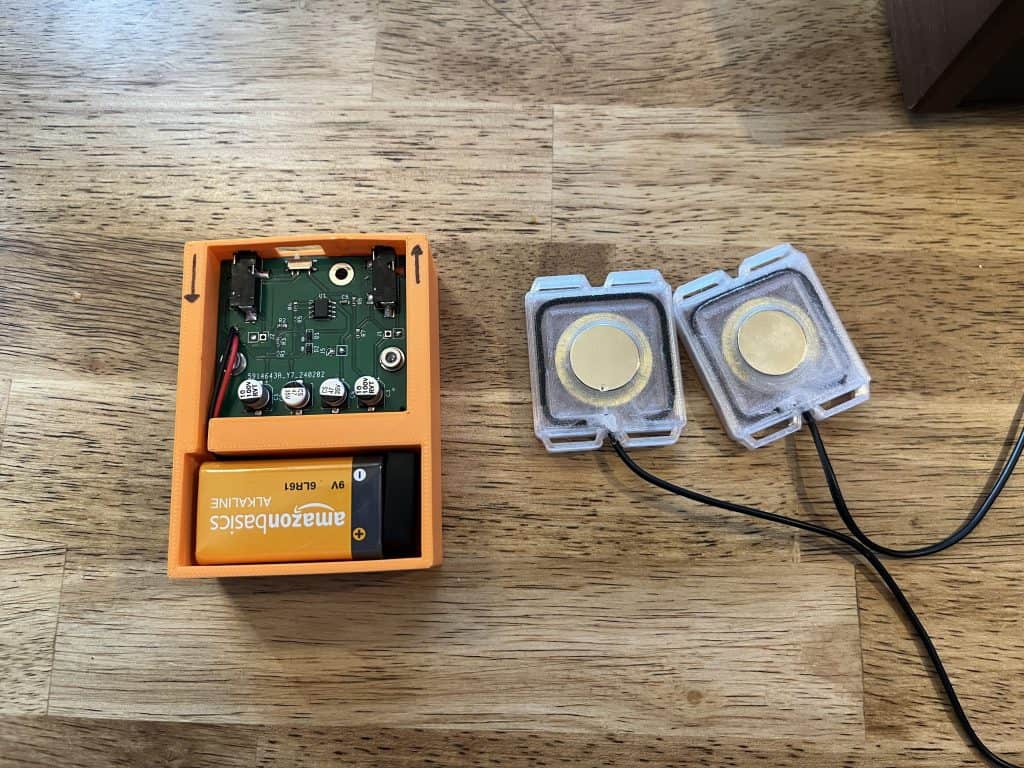
For serious recording, using a dedicated preamp designed for piezo or instrument-level inputs can make all the difference. Some reliable options include:
- Barcus Berry 3000A Preamp – A long-time favorite for contact mics and acoustic instruments.
- LR Baggs Para DI – Offers EQ shaping and high input impedance, ideal for piezo-based systems.
- Fishman Platinum Stage EQ/DI – Compact, with impedance matching and tonal control.
- Zoom H6 or Tascam DR-100mkIII – Portable recorders with high-impedance instrument inputs that handle piezos well.
If you’re working with DIY contact mics, pairing them with a small buffer circuit or FET-based preamp can significantly improve clarity and dynamic response.
Combining with Other Equipment
Contact mics often work best when paired with other mics or sound sources. For example:
- Use a contact mic for low-end vibration detail and a condenser mic for ambient or airborne sound.
- Combine multiple contact mics on different surfaces (wood, metal, glass) for layered textures.
- Run your contact mic through EQ, compression, or reverb to shape its tonal character, since raw piezo signals can sound mid-heavy or resonant.
If you’re capturing sounds for experimental music, film Foley, or acoustic instruments, experiment with effects pedals, analog mixers, or field recorders that can accept high-Z inputs.
Tips for Clean Recording

- Use shielded cables – Piezo elements are sensitive to interference and hum.
- Avoid overdriving inputs – Contact mics can generate high transient peaks.
- Monitor gain staging carefully – Keep headroom to prevent clipping.
- Record multiple takes – Surface contact and pressure can change tone drastically.
Common Pairing Mistakes to Avoid
- Plugging directly into a standard XLR mic input without a proper DI or preamp.
- Using long, unbalanced cables that pick up noise.
- Ignoring ground loops when connecting to multiple power sources.
- Forgetting that some contact mics may require additional isolation or damping for optimal tone.
Final Thoughts
Pairing your contact mic with the right preamp isn’t just a technical step — it’s what unlocks its full sonic potential. Whether you’re recording the resonance of a guitar body, the hum of an industrial pipe, or the vibrations of a window in the rain, choosing proper gear ensures you capture the full spectrum of detail.
With the right setup, your contact mic transforms from a simple vibration sensor into a powerful creative tool capable of revealing hidden textures and acoustic worlds beneath the surface.


