

The Best Mics for Golf Influencers
Your Ultimate Guide to Microphones for Golf Content Creation
If you’re a golf influencer, sharing swing tips, on-course commentary, gear reviews, or course walkthroughs, good audio is just as essential as crisp video. Wind, distance, ambient noise, and variable lighting make recording on a golf course uniquely challenging. The right microphone helps cut through the noise, capture your voice from a distance, and maintain clarity even when you’re walking or talking into the wind.
In this guide, we’ll walk through excellent mic options and dive into deeper considerations to help you find the right mic for your golf content creation needs.
Which is the Top Microphone for Golf Influencers?
- 5 microphones compared on the same points
- No brand pays to appear or to rank higher
- Updated when models change or are discontinued
Our top picks
Editor’s choice
Best Overall
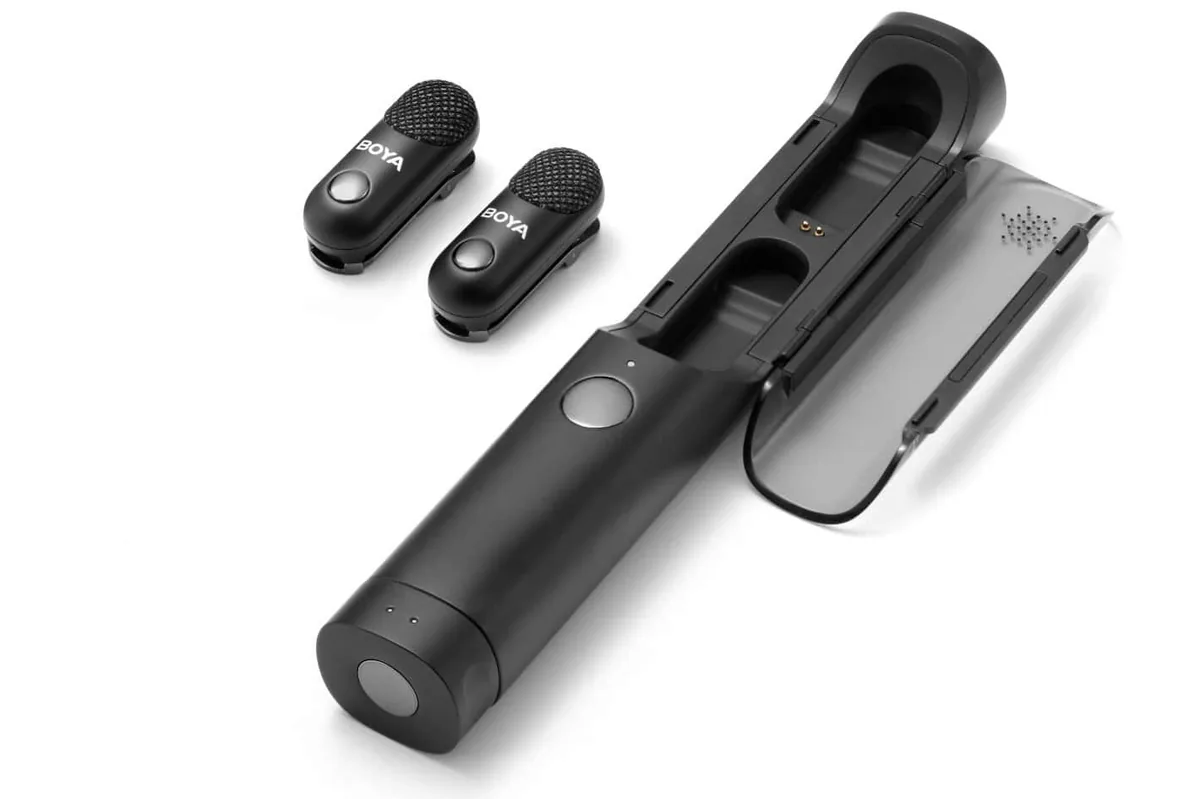
BOYA MAGIC
The BOYA MAGIC is a 4-in-1 wireless microphone with clip-on, handheld, desktop, and on-camera modes—perfect for clear audio while moving between shots. Its AI noise cancellation and plug-and-play connectivity make it a portable choice for on-course content.
Best for Long-Range Recording
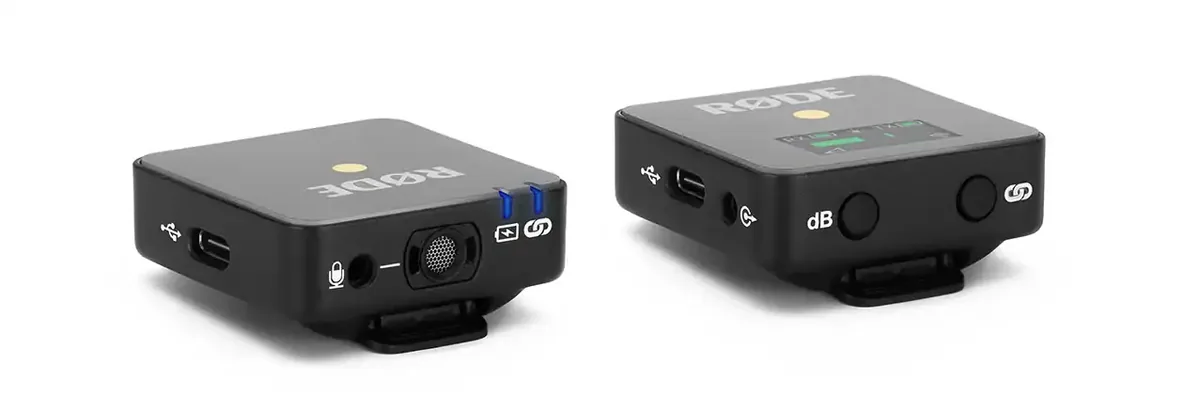
Rode Wireless GO II
The Rode Wireless GO II delivers broadcast-quality wireless audio with dual transmitters, onboard recording, and long-range reliability. It’s ideal for golf creators filming interviews or commentary while walking the course.
Best Background Noise Reduction
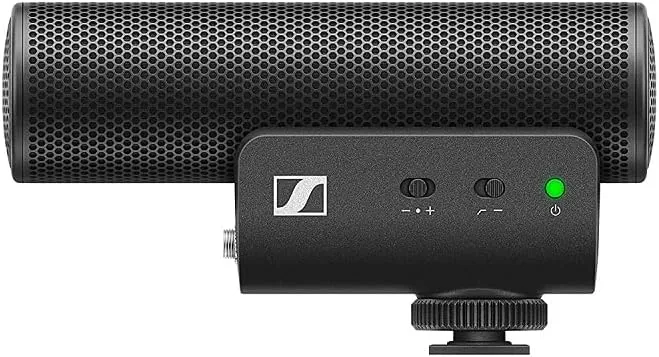
Sennheiser MKE 400
The Sennheiser MKE 400 is a compact shotgun mic built for directional clarity, cutting through wind and background noise during static shots or golf cart recordings. Its durable build and focused pickup make it great for professional on-camera use.
Compared at a glance
| Photo | Model | Best for | What stands out | Buy |
|---|---|---|---|---|
| Rode Wireless GO II | Best for Long-Range Recording | — | Check price | |
| Sennheiser MKE 400 | Best Background Noise Reduction | — | Check price | |
| Shure MV7 Microphone | — | Has both USB and XLR output | Check price | |
| DJI Mic 2 | — | — | Check price |
Every pick reviewed
#1 Best Overall
BOYA MAGIC
Sound Quality: ⭐ ⭐ ⭐ ⭐ ⭐
Design: ⭐ ⭐ ⭐ ⭐⭐
Features: ⭐ ⭐ ⭐ ⭐
The BOYA MAGIC is a next-generation wireless microphone system designed with versatility and mobility in mind, two things every golf influencer needs on the course. This compact, transformable mic supports four different forms: clip-on, handheld, desktop, and on-camera, making it perfect for switching between interviews, live commentary, and cinematic golf shots without carrying multiple audio setups.
It connects easily to smartphones, DSLRs, and tablets through USB-C, Lightning, or 3.5 mm ports, allowing seamless recording whether you’re shooting a quick swing analysis on your phone or filming a professional course walkthrough.
Its AI-powered noise cancellation makes a huge difference outdoors. Even when wind or background chatter picks up around the fairway, the BOYA MAGIC filters out ambient noise to keep voices clear. The included receiver and transmitter pair connect quickly and remain stable across a typical range of 50–100 meters, ideal for vlog-style walk-and-talk videos or player interviews after a round.
Overall, the BOYA MAGIC balances performance, portability, and affordability. It’s an excellent entry-level or backup wireless system for creators who want solid results without spending professional-grade prices.
#2 Best for Long-Range Recording
Rode Wireless GO II
Sound Quality: ⭐ ⭐ ⭐ ⭐ ⭐
Design: ⭐ ⭐ ⭐ ⭐
Features: ⭐ ⭐ ⭐ ⭐
The Rode Wireless GO II has become a benchmark for compact wireless audio. It features two transmitters and one receiver, each small enough to clip onto a collar, shirt, or bag strap.
Both transmitters have built-in microphones, so you can record two people at once, perfect for co-hosts or on-course interviews. Each unit also supports external lavalier mics if you want to hide the setup.
Golf influencers love this system because of its reliable signal stability, long range (up to 200 meters line-of-sight), and the inclusion of onboard recording. If your connection drops mid-swing commentary, the transmitters still record internally, ensuring you never lose a take.
The companion RØDE Central app adds another layer of control: adjusting gain, managing safety channels, or exporting files directly. For golfers who constantly move between shots, carts, and commentary segments, the Wireless GO II provides true creative freedom.
Check price on Amazon Opens in a new tab · we may earn a commission
#3 Best Background Noise Reduction
Sennheiser MKE 400
Sound Quality: ⭐ ⭐ ⭐ ⭐
Design: ⭐ ⭐ ⭐ ⭐
Features: ⭐ ⭐ ⭐ ⭐
The Sennheiser MKE 400 is a compact, high-quality shotgun microphone made for creators who prefer clean, directional audio. For golf influencers who shoot from a fixed position, whether you’re filming your swing from a tripod or capturing dialogue from a golf cart, the MKE 400 isolates your voice and minimizes unwanted background noise.
Its supercardioid pickup pattern focuses on what’s directly in front of the mic while rejecting off-axis sound. The built-in shock mount prevents handling noise when repositioning your camera, and the included wind protection helps reduce outdoor rumble. The MKE 400 also has a built-in headphone jack for real-time monitoring, ensuring you catch clipping or wind distortion early.
It’s a smart choice for creators who value compactness and simplicity while maintaining professional-grade clarity.
Check price on Amazon Opens in a new tab · we may earn a commission
#4
Shure MV7 Microphone
Sound Quality: ⭐ ⭐ ⭐ ⭐
Design: ⭐ ⭐ ⭐ ⭐
Features: ⭐ ⭐ ⭐ ⭐
The Shure MV7 bridges the gap between studio-grade and plug-and-play recording. This USB/XLR hybrid microphone is modeled after Shure’s legendary SM7B but optimized for modern creators. Golf influencers use it primarily for voiceovers, post-round analysis, or podcast-style commentary, where clarity and presence are essential.
Its dual connectivity means you can record directly into your laptop via USB or into an audio interface using XLR. The Voice Isolation Technology ensures your voice stands out even in noisy environments, while the ShurePlus MOTIV app lets you fine-tune EQ, compression, and tone profiles. The mic delivers rich, broadcast-level sound without requiring heavy post-production work.
Although it’s not designed for outdoor movement, the MV7 remains a powerhouse for indoor studio segments or editing commentary after filming on the course.
What we like
- Has both USB and XLR output
- Has a touch panel for gain control
- Highly versatile
What we don’t
- Windscreen may be loose
Check price on Amazon Opens in a new tab · we may earn a commission
#5
DJI Mic 2
Sound Quality: ⭐ ⭐ ⭐ ⭐
Design: ⭐ ⭐ ⭐ ⭐
Features: ⭐ ⭐ ⭐ ⭐
The DJI Mic 2 is a premium dual wireless microphone system built for creators who demand portability and studio-grade sound on the move.
Designed with an elegant charging case, touchscreen interface, and advanced noise cancellation, it’s perfect for golf influencers filming walk-and-talk segments, live tutorials, or post-game interviews. Each transmitter has a built-in mic and supports external lavaliers, while the receiver offers real-time monitoring and intuitive level controls.
The DJI Mic 2 delivers up to 250 meters of wireless range, making it ideal for open golf courses where distance often challenges other systems. Its 32-bit float recording captures every nuance of speech without clipping, even in windy or high-volume conditions.
With solid battery life and seamless integration across cameras, smartphones, and action cams, this system combines high-end performance with effortless usability.
Check price on Amazon Opens in a new tab · we may earn a commission
Things to Consider When Recording Golf Audio Content
Wind and Ambient Noise: The Battle on the Course
Wind is your biggest adversary. Even a moderate breeze can ruin audio if your mic isn’t protected. Use dead cats (fuzzy windshields) or foam windscreens. Shotgun mics help isolate directionally, but are still vulnerable at open angles. Wireless packs should ideally sit under clothing or in wind-shielded pouches.
Wireless Range, Latency & Dropouts
Courses often have RF interference from nearby buildings, cell towers, or cameras. Pick systems with robust wireless ranges (100 m+ line-of-sight), on-device fallback recording, and low latency so audio sync stays intact. Rode Wireless GO II offers internal recording for transmitters, helping in case the link fails.
Mounting & Rig Compatibility
Your mic should integrate well with tripods, gimbals, or mounts on your camera or rig. Shotgun mics often attach via hot shoe or shock mounts. Lavalier mics should have a good clip design or magnetic options to keep them stable while walking.
Battery Life & Power Strategies
Wireless transmitters vary. Some last 5–7 hours per charge; some include charging cases. Always carry backup power or charging options (USB banks).
Post-Processing & Audio Correction
Even the best mic needs polish. Use noise gates, EQ, de-essing, and clip suppression. Normalize your levels so speech remains steady while ambient sounds ebb. On windy takes, drop a low-cut filter (high-pass) around 80–100 Hz.
Audio Monitoring & Safety Recording
Always monitor your audio live via headphones. If your system supports dual-track or safety-channel recording, enable that so you have a lower-gain backup in case of clipping.
Conclusion
Crafting compelling golf content demands that your voice is heard clearly. No crackle, no wind hiss, no dropouts. Choosing the right mic is not just about spec sheets. It’s about matching your shooting style, environment, and post-production workflow. The options above offer a variety of workflows: from mobile walking commentary to tightly controlled studio voiceover.
Frequently Asked Questions
Can I use just the microphone on my phone?
Yes, many of these mics (especially wireless systems) support USB-C or Lightning with adapters. Just be sure to set your phone’s audio input to external mic and manage gain carefully.
Do I really need both wireless AND shotgun mics?
It depends on your shoot format. For walking commentary, go wireless. For seated or fixed filming, a shotgun mic gives directionality. Having both gives you flexibility.
How do I deal with wind on an open fairway?
Use robust wind protection (dead cat, foam filters, “blimps” for shotgun kits), position mics behind you relative to wind direction, and lean into natural shields (trees, bodies) when possible.
How far can wireless mic signals reliably go on a golf course?
Expect 50–100 meters in real-world conditions, though spec sheets often cite ideal line-of-sight distances. Always test your layout before filming.