
Your Ultimate Guide to the Best Audio-Technica Microphones
Audio-Technica has built its reputation around consistent sound quality, reliability, and accessibility across price ranges. What makes the brand stand out is how well its microphones scale, from beginner-friendly options to studio-level tools, without drastically changing its core sound philosophy.
Most Audio-Technica microphones focus on clarity, balanced frequency response, and usability, which is why they’re commonly used in home studios, professional recording environments, and content creation setups.
This guide covers the best Audio-Technica microphones, based on sound quality, versatility, and real-world performance.
Which Audio-Technica Microphone Is Best?
Editor's Choice  Best Overall | 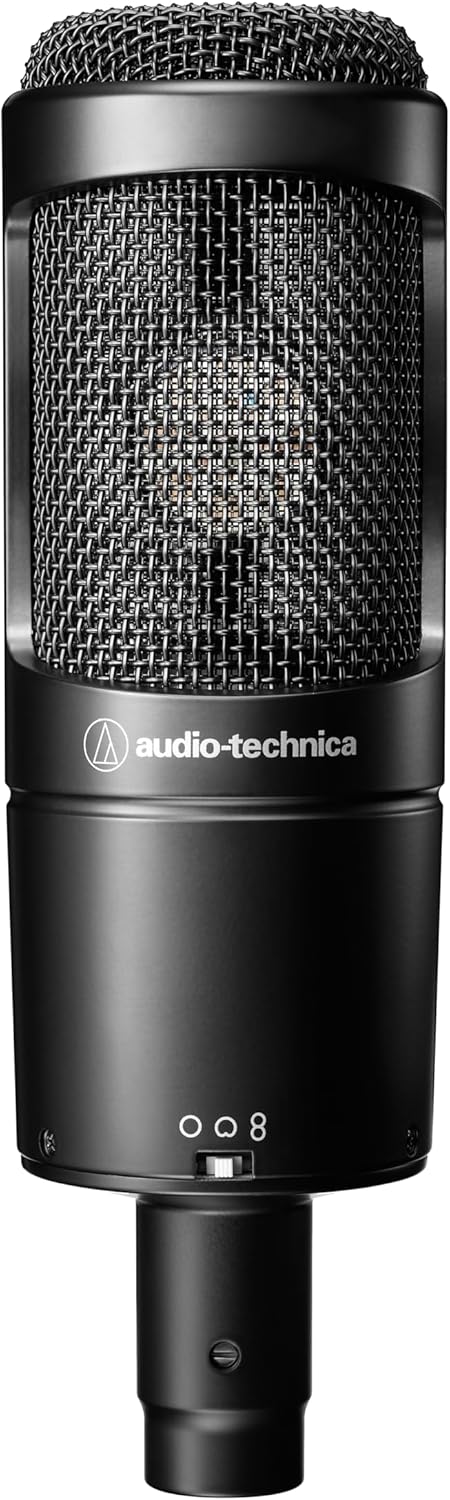 Best Studio | 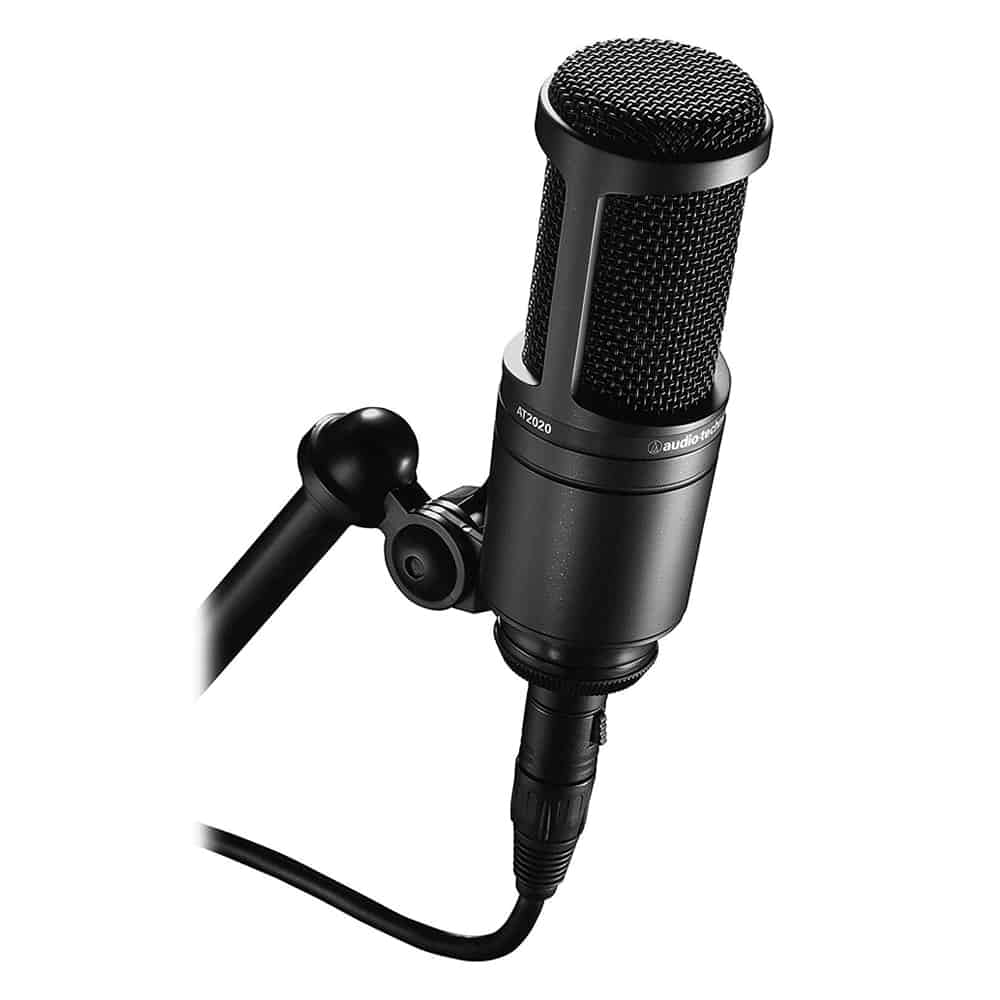 Best Budget |
Audio-Technica AT2035A balanced condenser microphone that delivers clean, reliable performance across vocals and recording setups. | Audio-Technica AT2050A versatile multi-pattern condenser mic designed for flexible and detailed studio recording. | Audio-Technica AT2020A proven entry-level condenser microphone that offers solid sound quality for home studios. |
Sound Quality: ★★★★★
Design: ★★★★
Features: ★★★★
| Sound Quality: ★★★★★
Design: ★★★★
Features: ★★★★
| Sound Quality:★★★★
Design: ★★★★
Features: ★★★★
|
Let’s Go Over Each Audio-Technica Microphone
#1: Audio-Technica AT2035
The AT2035 sits right in the sweet spot between affordability and professional performance.
It uses a large-diaphragm condenser design with a cardioid pickup pattern, which focuses on your voice while minimizing background noise. This makes it particularly effective in home studio environments where perfect acoustic treatment isn’t always possible.
What stands out is its low self-noise, which results in cleaner recordings with less hiss, especially noticeable in voice-overs and quiet passages. It also handles high sound pressure levels well, meaning it can record louder sources like instruments without distortion.
The overall sound profile is neutral and controlled. It doesn’t overly boost highs or lows, which gives you flexibility during editing and mixing. This is one of the reasons it’s widely used. It gives you a reliable base rather than forcing a specific sound.
In real-world use, the AT2035 is one of the most dependable microphones you can build a setup around. It performs consistently across vocals, instruments, and general recording work.
Pros and Cons of the Audio-Technica AT2035
| Pros | Cons |
|---|---|
| ✔️ Can eliminate ambient noise ✔️ Rich recording quality ✔️ Ideal for voice recordings ✔️ Low noise floor | ✖️ Requires external power supply |
#2: Audio-Technica AT2050
The AT2050 is designed for users who want more control and flexibility in their recordings.
Its biggest advantage is the ability to switch between multiple polar patterns: cardioid, omnidirectional, and figure-8. This allows you to adapt to different recording situations, from solo vocals to interviews or ambient recording.
The sound is detailed and slightly more open compared to entry-level models. It captures more nuance in vocals and instruments, which becomes especially important in music production.
It also includes a pad and low-cut filter, giving you additional control over loud sources and low-frequency noise. These features help you capture cleaner audio before it reaches your editing stage.
This is a microphone that works best in treated environments where its detail can fully come through.
Pros and Cons of the Audio-Technica AT2050
| Pros | Cons |
|---|---|
| ✔️ Multiple polar patterns ✔️ High recording flexibility ✔️ Detailed, studio-quality sound | ✖️ More sensitive to room noise ✖️ Higher complexity |
#3: Audio-Technica AT2020

The AT2020 is one of the most popular entry-level condenser microphones, and it’s easy to see why.
It offers a wide dynamic range and strong transient response, allowing it to capture vocals and instruments clearly without sounding flat.
Its cardioid pattern helps isolate your voice from background noise, making it usable in typical home setups.
What makes it stand out is consistency. It doesn’t try to over-enhance your sound, which makes it easier to edit and mix later. While it lacks the refinement of higher-end models, it provides a solid foundation for recording.
For beginners or budget-conscious users, this is often the starting point for building a proper audio setup.
Pros and Cons of the Audio-Technica AT2020
| Pros | Cons |
|---|---|
| ✔️ Aesthetic vintage design ✔️ Great first microphone for vocal beginners ✔️ Perfect for desktop use ✔️ Wide frequency response ✔️ Can be used for a home studio ✔️ Low price point | ✖️ Can be fragile ✖️ Sensitive to the proximity effect ✖️ Will need an external shock mount or boom stand to prevent noise vibrations |
#4: Audio-Technica AT2040
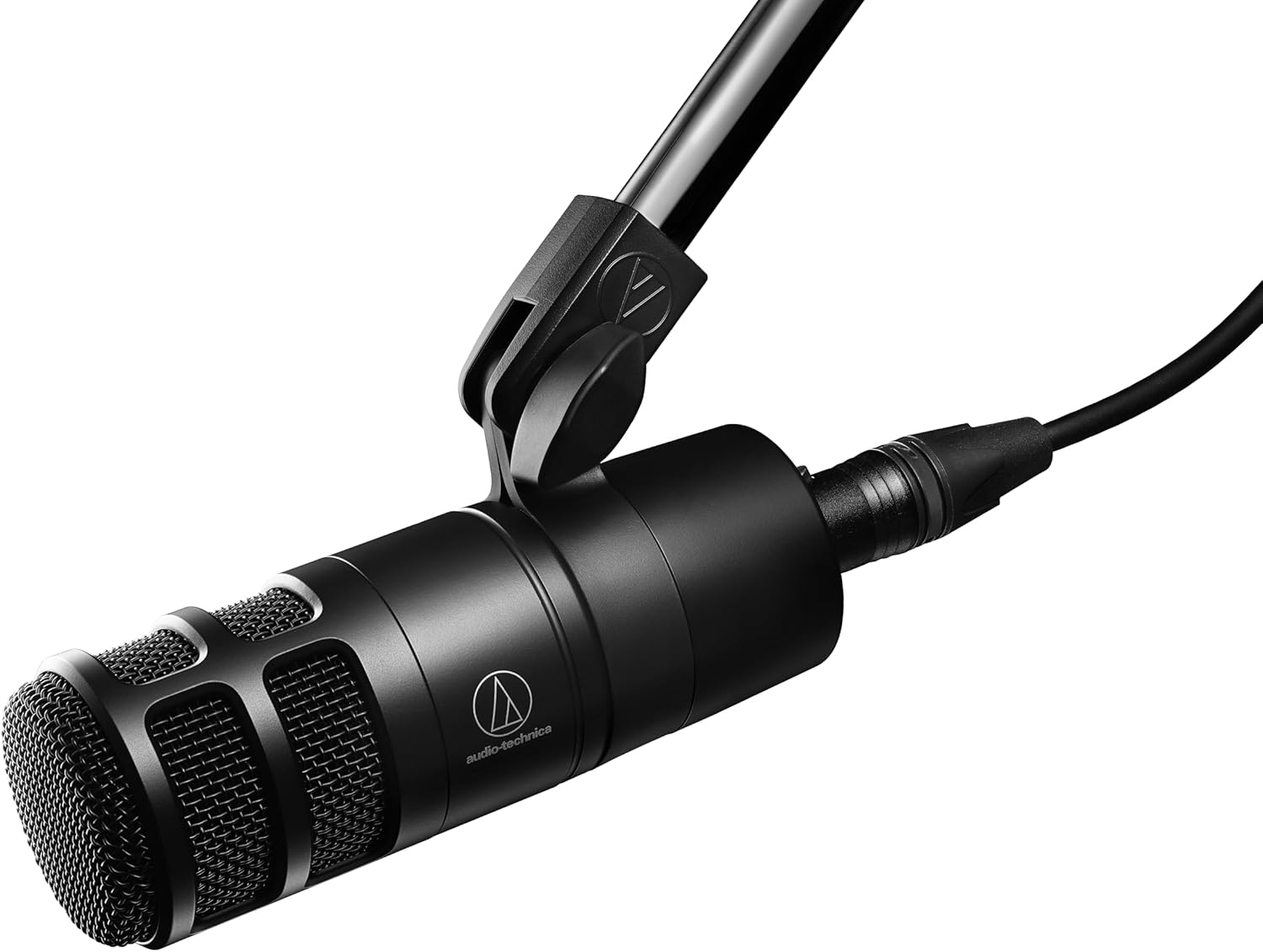
The AT2040 is built specifically for voice-focused recording, and it shows in how it handles real-world environments.
Unlike condenser microphones, this uses a dynamic capsule, which naturally reduces sensitivity to background noise. That makes it a strong choice for untreated rooms, where echo, keyboard noise, or ambient sound would otherwise become an issue. Instead of capturing everything in the room, it focuses tightly on your voice.
Its hypercardioid pickup pattern takes this a step further. Compared to standard cardioid microphones, it narrows the capture area even more, which helps isolate your voice and maintain clarity even when your environment isn’t ideal.
Another standout feature is the internal construction. The AT2040 includes a built-in shock-mounted capsule and multi-stage windscreen. This reduces plosives and vibrations without requiring external accessories, which simplifies your setup and keeps your audio consistent.
In terms of sound, it leans toward a broadcast-style profile: controlled, slightly warm, and focused on midrange clarity. This works particularly well for podcasting, streaming, and voiceovers where intelligibility matters more than high-end detail.
The trade-off is that it requires more gain than a condenser microphone. To get the best performance, you’ll need a capable audio interface or preamp.
Pros and Cons of the Audio-Technica AT2040
| Pros | Cons |
|---|---|
| ✔️ Excellent noise rejection for untreated rooms ✔️ Focused vocal clarity with hypercardioid pickup ✔️ Built-in pop filtering and shock isolation ✔️ Strong for podcasting and streaming | ✖️ Requires higher gain to perform well ✖️ Less detailed than condenser microphones ✖️ Not ideal for music or multi-purpose studio use |
#5: Audio-Technica ATR2500x-USB
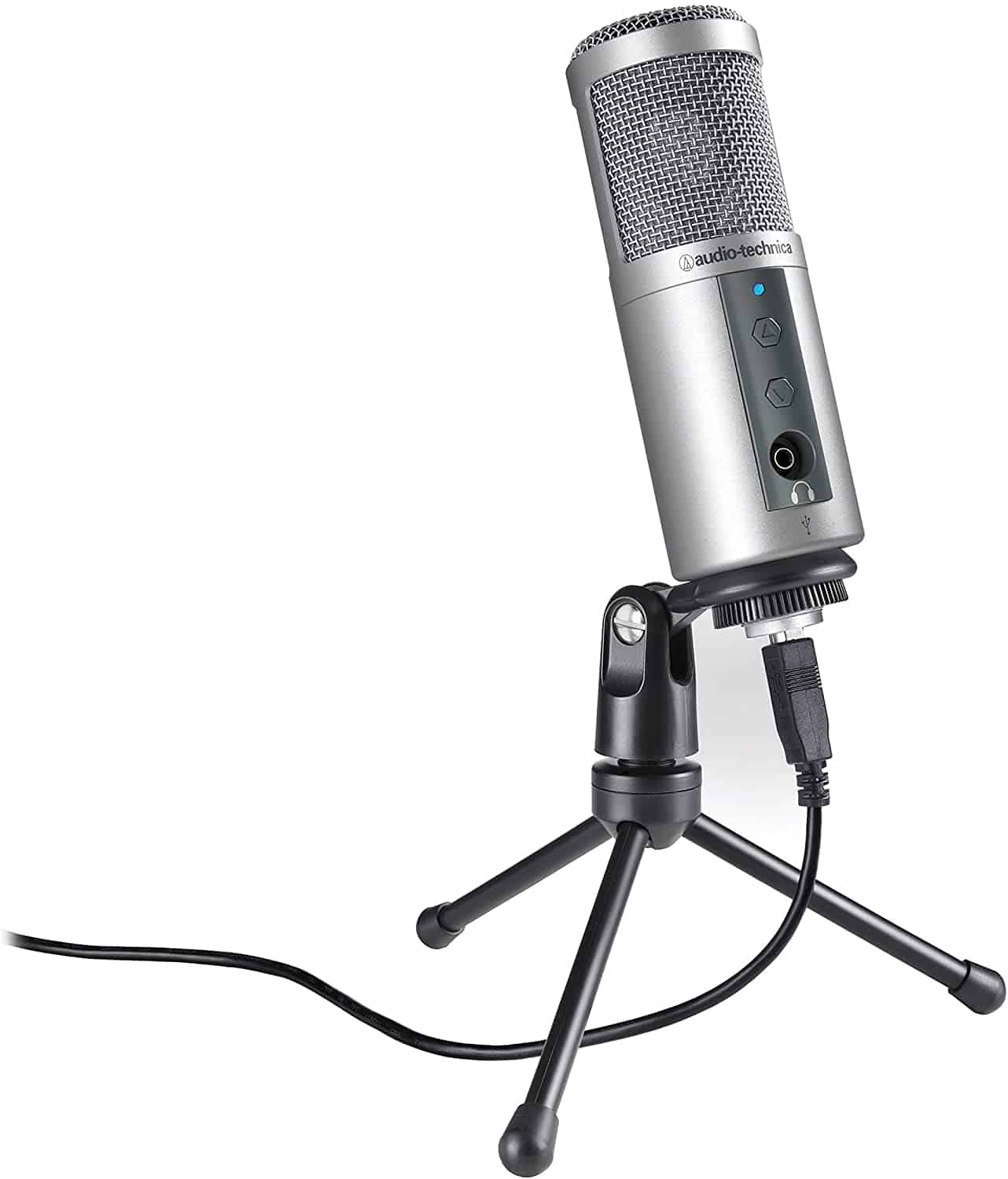
The ATR2500x-USB is designed for simplicity and accessibility, but it still delivers solid performance for everyday recording.
It uses a condenser capsule, which allows it to capture more detail than dynamic microphones. This makes it suitable for voiceovers, streaming, and general content creation where clarity is important.
The biggest advantage is how easy it is to use. With USB-C connectivity, it plugs directly into your computer without requiring an audio interface. This removes the complexity of traditional XLR setups and makes it ideal for beginners or users who want a quick, reliable solution.
It also includes a headphone jack for zero-latency monitoring. This allows you to hear your voice in real time, which is important for maintaining consistent levels while recording.
In practice, the ATR2500x-USB delivers a clean and balanced sound, but like most condenser microphones, it is more sensitive to background noise. This means your recording environment still plays a role in overall quality.
While it doesn’t offer the flexibility or upgrade potential of XLR microphones, it performs well within its category and provides a strong starting point for content creators.
Pros and Cons of the Audio-Technica ATR2500x-USB
| Pros | Cons |
|---|---|
| ✔ Affordable price ✔ Easy and convenient to use ✔ Nice input monitoring for zero-latency monitoring ✔ Generous input signal ✔ Clean and clear voice recordings | ✘ Quieter sounds may require mic preamps and preamp gain |
What Makes Audio-Technica Microphones Different?
Audio-Technica microphones stand out because of their focus on balanced, usable sound rather than heavy coloration. Instead of shaping audio aggressively at the source, most of their microphones aim to capture a clean signal that can be refined later.
One of the key technical strengths is how their diaphragms are engineered. Many models are designed to deliver a wide frequency response with controlled high-end detail, which helps preserve clarity without introducing harshness. This is especially important for vocals, where overly bright microphones can become fatiguing or difficult to mix.
Another defining characteristic is consistency across the lineup. Whether you’re using an entry-level model like the AT2020 or stepping up to something like the AT2050, the core sound philosophy remains similar. You’re not relearning how your microphone behaves every time you upgrade.
Audio-Technica also tends to strike a balance between detail and control. Their condenser microphones capture enough nuance for studio work, but many are slightly more forgiving than ultra-sensitive alternatives. This makes them more practical for home studios where acoustic treatment isn’t perfect.
Durability and reliability are also part of the brand’s appeal. These microphones are designed for regular use, whether that’s daily content creation, recording sessions, or live applications. They’re not just built to sound good. They’re built to keep working consistently over time.
Overall, Audio-Technica microphones are best described as predictable in the right way. They don’t try to impress with exaggerated sound. They give you a clean, dependable foundation to build on.
How to Choose the Right Audio-Technica Microphone
Choosing the right Audio-Technica microphone comes down to three main factors: your environment, your use case, and your setup.
The first thing to consider is your recording space. If your room isn’t acoustically treated, using a highly sensitive condenser microphone can introduce unwanted noise and reflections. In this case, a more controlled option, like a dynamic microphone such as the AT2040, will give you cleaner, more focused results.
If you’re working in a quieter or treated environment, a condenser microphone becomes the better choice. Models like the AT2035 or AT2050 will capture more detail, which is especially noticeable in vocals and instruments.
Your use case matters just as much. For voice-heavy content like streaming, podcasting, or voiceovers, consistency and clarity are more important than extreme detail. A microphone that keeps your voice controlled and intelligible will perform better in the long run.
For music recording, accuracy and dynamic range become more important. You’ll want a microphone that captures subtle changes in tone and performance without compressing or flattening the sound.
Your setup also plays a role. If you’re using an XLR microphone, you’ll need an audio interface and proper gain staging to get the best results. This adds complexity but also gives you more control and upgrade potential. If you prefer simplicity, a USB microphone like the ATR2500x-USB provides a more straightforward solution, though with less flexibility over time.
Finally, think about long-term use. It’s often better to choose a microphone that can grow with your setup rather than one you’ll outgrow quickly. A model like the AT2035 is a strong example. It works well for beginners but still holds up as your recording quality improves.
In the end, the right choice isn’t about picking the “best” microphone. It’s about choosing the one that performs consistently in your specific recording conditions.
Final Note
Audio-Technica microphones are built around one key strength: reliability across different recording situations. They don’t rely on heavy sound coloration or gimmicks. Instead, they focus on delivering clean, balanced audio that works consistently, whether you’re recording vocals, instruments, or content for streaming.
In the end, the best Audio-Technica microphone isn’t the most expensive. It’s the one that fits your setup and delivers consistent results every time you hit record.
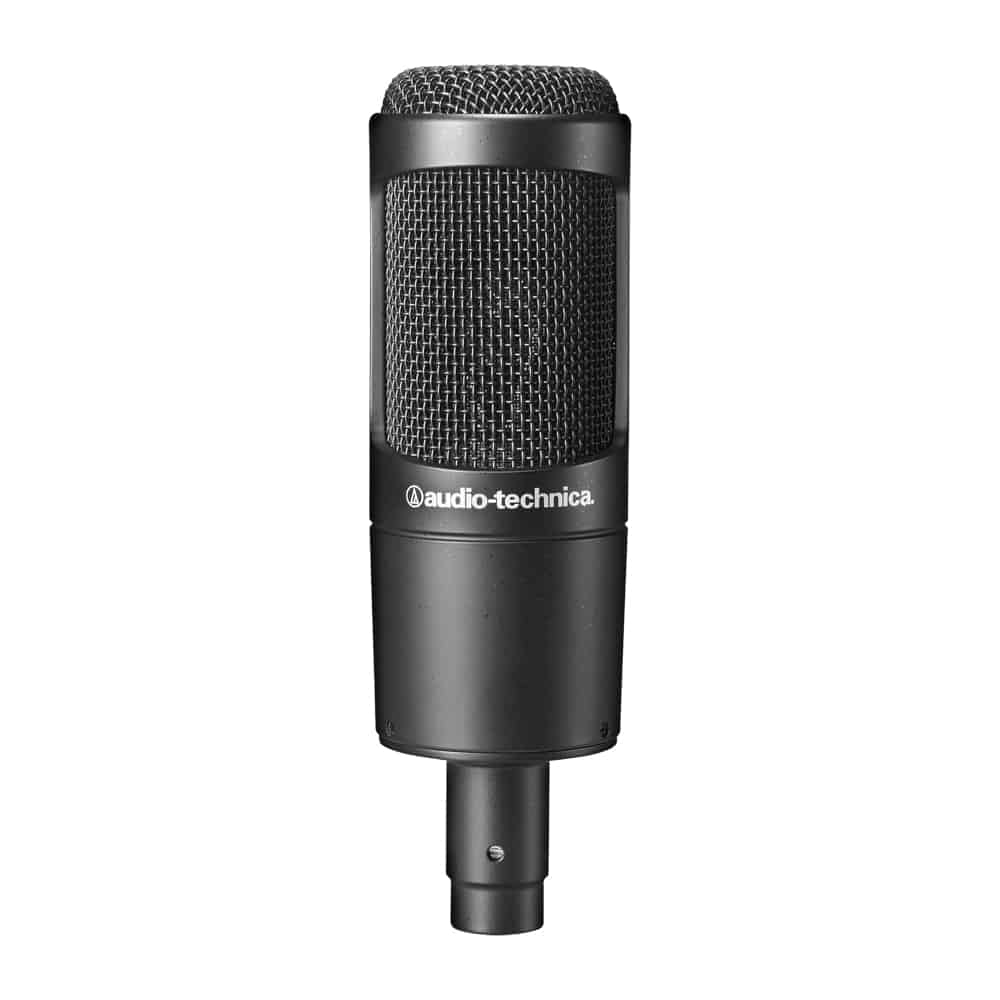
Editor’s Choice
Audio-Technica AT2035
The Audio-Technica AT2035 stands out because it delivers consistent, professional-quality sound without unnecessary complexity.
It doesn’t try to shape your audio aggressively. Instead, it provides a clean, neutral recording that works across different voices and recording styles. That makes it easier to edit, mix, and refine your sound over time.
Its low noise floor and strong handling of different sound sources make it one of the most dependable microphones in its class.
If you’re looking for a microphone that you can build your setup around and continue using as your skills improve, the AT2035 is one of the safest long-term choices.