
Your Ultimate Guide to the Best AKG Microphones
AKG has been building microphones since 1947, and its lineup reflects that legacy: precision engineering, consistent sound profiles, and strong studio reliability. What makes AKG stand out isn’t just sound quality. It’s how their microphones are designed for specific use cases. Some prioritize clarity and neutrality, while others focus on versatility or affordability.
This guide covers the best AKG microphones available, focusing on real-world performance across studio recording, vocals, instruments, and home setups.
Which AKG Microphone Is Best?
Editor's Choice  Best Overall | 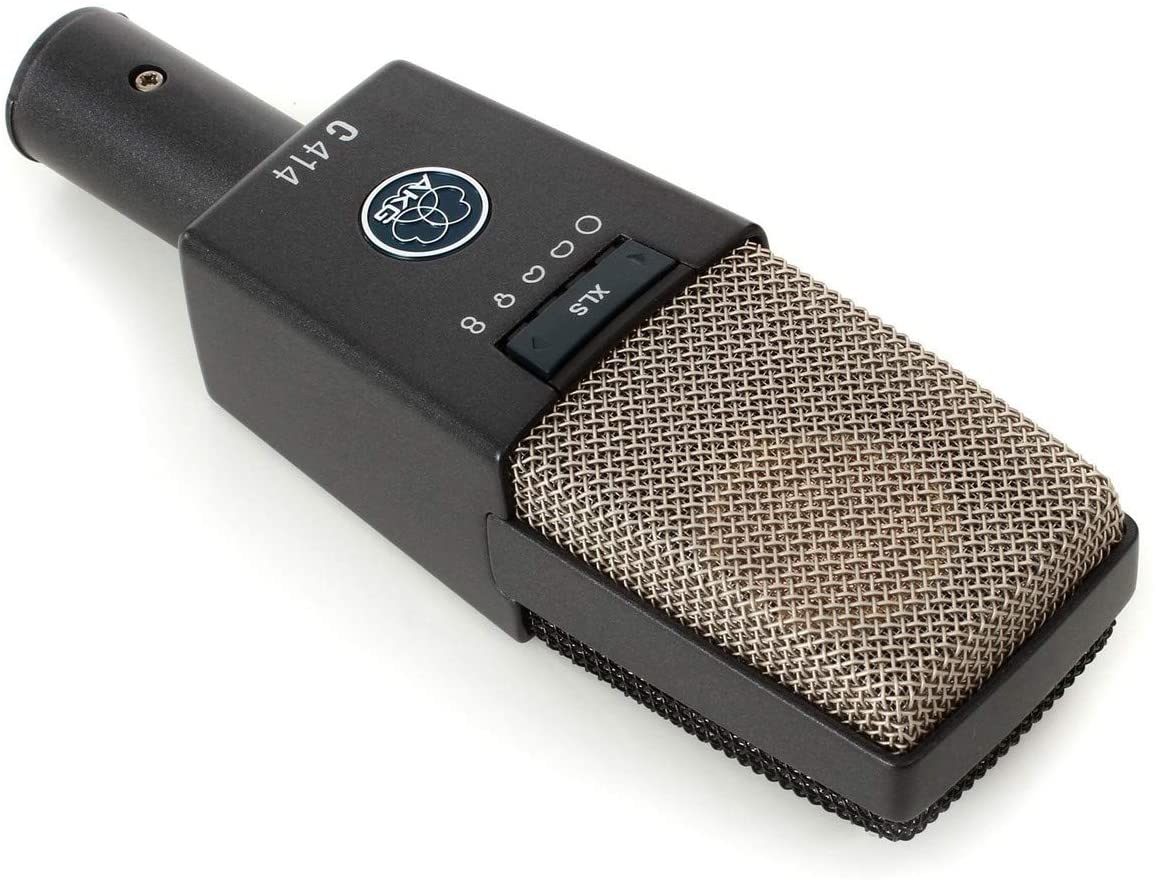 Best Studio |  Best Budget |
AKG C214A balanced studio condenser that delivers professional sound across vocals and instruments. | AKG C414 XLSA flagship multi-pattern microphone offering unmatched flexibility and precision for professional recording. | AKG P220An affordable condenser microphone that provides solid performance for home studio recording. |
Sound Quality: ★★★★★
Design: ★★★★★
Features: ★★★★
| Sound Quality: ★★★★★
Design: ★★★★
Features: ★★★★★
| Sound Quality:★★★★
Design: ★★★★
Features: ★★★★
|
Let’s Go Over Each AKG Microphone
#1: AKG C214
The AKG C214 is widely considered one of the most practical “pro-level” microphones because it delivers high-end studio sound without the complexity of flagship models.
It uses a large-diaphragm condenser capsule derived from AKG’s premium designs, which gives it a clear and focused midrange with controlled high frequencies. This is especially important for vocals, where presence and intelligibility matter more than exaggerated brightness.
One of its standout characteristics is how it balances detail and control. It captures enough nuance for studio work but avoids becoming overly sensitive to room reflections. That makes it more forgiving than many condensers in its class.
It also includes a built-in attenuation pad and low-cut filter. These aren’t just add-ons. They allow the mic to handle louder sound sources and reduce unwanted low-end noise before recording.
In real-world use, the C214 works across multiple scenarios. It’s strong for vocals, acoustic instruments, and even louder sources like amps. It doesn’t try to color the sound too heavily, which makes it easier to mix later.
This is the kind of microphone that fits into almost any setup and continues to perform even as your recording chain improves.
Pros and Cons of the AKG C214
| Pros | Cons |
|---|---|
| ✔️ Ideal for instruments ✔️ Easy to use ✔️ Incredible design | ✖️ Single pick-up pattern ✖️ Incorrect mic position and angle may allow plosives and background noise to pass through |
#2: AKG C414 XLS
The AKG C414 XLS is one of the most versatile studio microphones ever made.
What immediately sets it apart is its nine selectable polar patterns, which allow it to adapt to almost any recording situation. Whether you’re capturing vocals, instruments, or room ambience, you can adjust the pickup pattern instead of switching microphones.
The sound profile is extremely neutral and transparent. It doesn’t add unnecessary coloration, which makes it ideal for professional recording where accuracy is critical. This is why it’s commonly used in studios for everything from vocals to orchestral recording.
Another key strength is its dynamic range. It can handle very quiet sounds while also capturing extremely loud sources without distortion, making it one of the most flexible microphones available.
In practice, the C414 XLS is less forgiving than entry-level models. It will capture everything, including imperfections in your room. But in a controlled environment, it delivers exceptional clarity and realism.
Pros and Cons of the AKG C414 XLS
| Pros | Cons |
|---|---|
| ✔ Extremely versatile ✔ Perfect for instruments ✔ Low noise hold | ✘ Expensive ✘ Can be difficult for beginners |
#3: AKG P220
The AKG P220 is designed for users who want studio-style sound without a high price point.
It uses a large-diaphragm condenser capsule that delivers a clear and slightly warm tone, making it suitable for vocals and general recording. While it doesn’t match the refinement of higher-end models, it provides enough detail for most home studio applications.
It also includes a pad and low-cut filter, which help manage louder sources and reduce unwanted noise. These features give it more flexibility than many microphones in its price range.
In real-world use, the P220 performs best in controlled environments but remains usable in less-than-perfect spaces. It doesn’t exaggerate harsh frequencies as much as cheaper condensers, which helps maintain a smoother sound.
It’s a strong starting point for beginners who want to step into studio recording without overinvesting.
Pros and Cons of the AKG P220
| Pros | Cons |
|---|---|
| ✔️ Good value for money ✔️ Comes with different accessories ✔️Very versatile ✔️ Can be used for streaming, recording, and performing ✔️Switchable bass-cut filter | ✖️ Highly sensitive ✖️ Harsh high-end |
#4: AKG P420
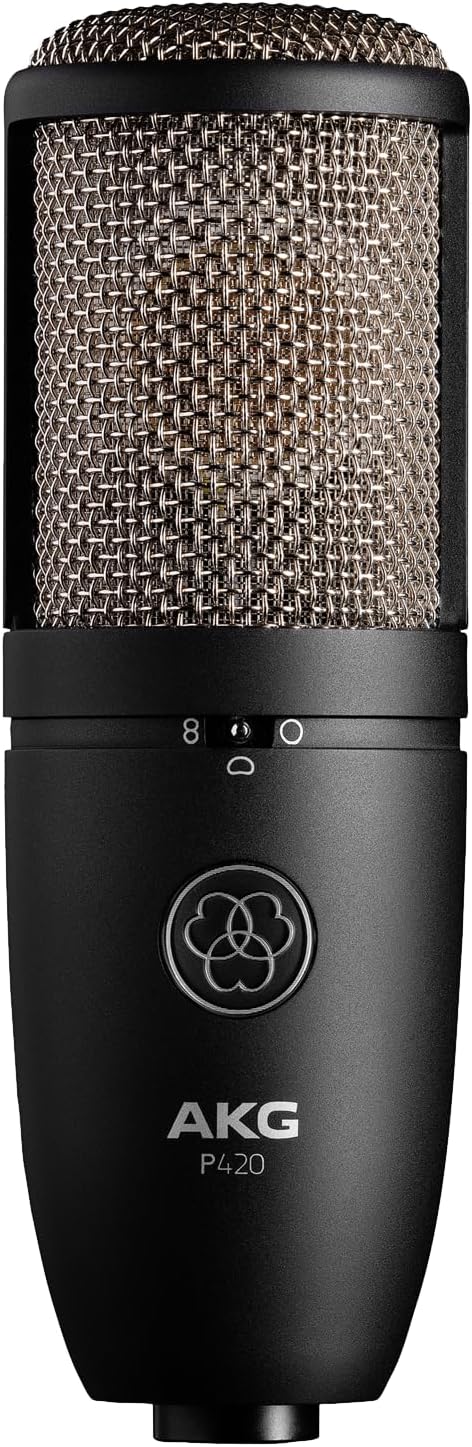
The AKG P420 is designed for users who need flexibility without moving into premium price territory.
The sound is slightly more colored than neutral studio microphones, with a bit of added presence that helps vocals stand out. While it doesn’t match the precision of higher-end models, it offers a practical balance between versatility and performance.
Its biggest advantage is its multi-pattern capability, allowing you to switch between cardioid, omni, and figure-8 modes. This makes it suitable for solo recording, interviews, and even room capture.
Pros and Cons of the AKG P420
| Pros | Cons |
|---|---|
| ✔ Highly versatile ✔ Handles very loud sound sources well ✔ Built-in pad and low-cut filter ✔ Delivers a warm yet transparent sound | ✖️ More sensitive to room acoustics ✖️ Slightly bulky and heavier ✖️ Not as refined or detailed |
#5: AKG P120
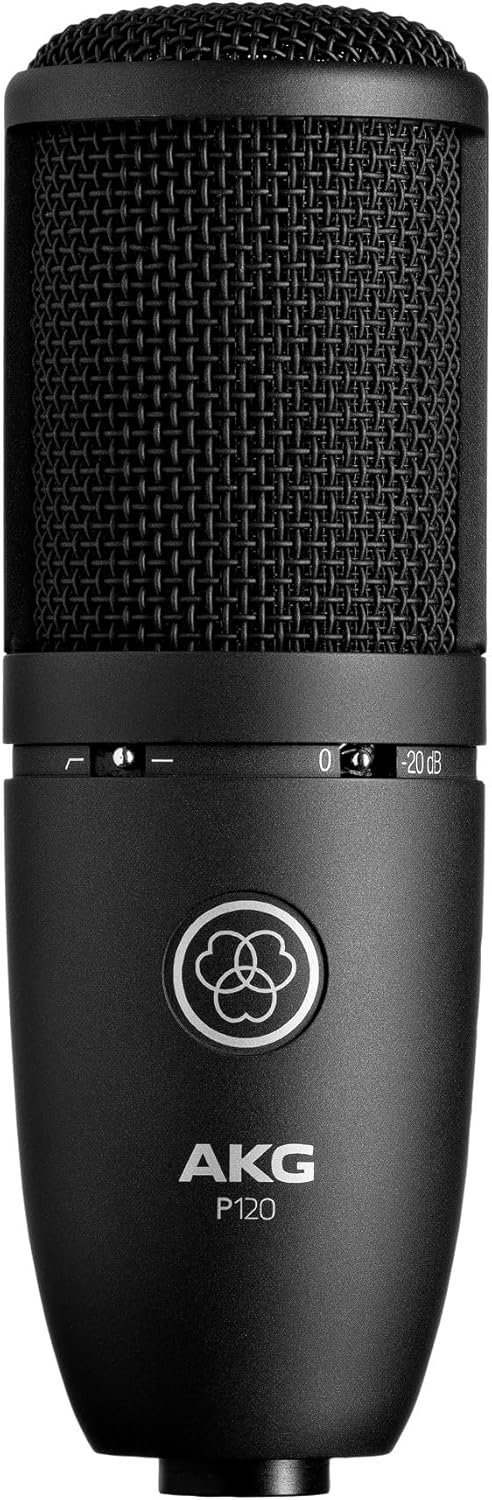
The AKG P120 is one of the most accessible ways to get into condenser microphones.
It uses a smaller diaphragm compared to higher-end models, but still delivers clear and accurate sound for vocals and instruments.
Its main strength is simplicity. It provides consistent results without requiring complex setup or adjustments. While it lacks the depth and detail of more expensive microphones, it remains a reliable option for basic recording needs.
Pros and Cons of the AKG P120
| Pros | Cons |
|---|---|
| ✔ Affordable entry point ✔ Clear and focused sound ✔ Simple design ✔ Compact and lightweight | ✖️ Limited detail and depth ✖️ Single polar pattern ✖️ Lacks advanced features ✖️ More noticeable noise pickup |
What Makes AKG Microphones Different?
AKG microphones are known for their precision and consistency. Instead of heavily coloring the sound, many of their models aim for accuracy, which makes them easier to work with in post-production. Condenser models in particular are designed to capture fine detail and high-frequency information, making them ideal for studio recording.
Another key strength is range. From entry-level models to flagship studio microphones, AKG offers options that scale with your setup.
How to Choose the Right AKG Microphone
The most important factor is your use case. If you want a single microphone that can handle most scenarios, the C214 offers the best balance between quality and usability. If you need maximum flexibility and professional-level control, the C414 XLS is the stronger choice. For beginners or budget setups, the P220 or P120 provides a practical starting point without sacrificing usability.
Final Note
AKG microphones have built their reputation on one core principle: consistency across different recording scenarios. Whether you’re using an entry-level model or a flagship studio mic, the focus is always on delivering clean, usable sound rather than exaggerated or overly colored audio.
In the end, the best AKG microphone isn’t necessarily the most expensive. It’s the one that fits your workflow and delivers consistent results every time you record.

Editor’s Choice
AKG C214
The AKG C214 stands out because it delivers studio-level performance in a practical, usable form.
It captures enough detail for professional recording while remaining more forgiving than ultra-sensitive microphones. That balance makes it suitable for both home studios and more advanced setups.
Unlike higher-end models that demand perfect conditions, the C214 works well in real-world environments while still producing clean, polished audio.
If you’re looking for an AKG microphone that offers long-term value without unnecessary complexity, this is the most well-rounded option in the lineup.