
Your Ultimate Guide to the Best Behringer Microphones
Behringer microphones are built around one core idea: accessible performance. Instead of competing directly with premium brands, Behringer focuses on delivering microphones that are affordable, durable, and usable in real-world setups. This makes them especially popular for beginners, live performers, and budget-conscious creators.
What stands out is how practical their lineup is. Most models are designed to work reliably in untreated environments, live settings, and simple recording setups, rather than requiring perfect studio conditions.
This guide covers the best Behringer microphones, focusing on value, usability, and real-world performance.
Which Behringer Microphone Is Best?
Editor's Choice  Best Overall | 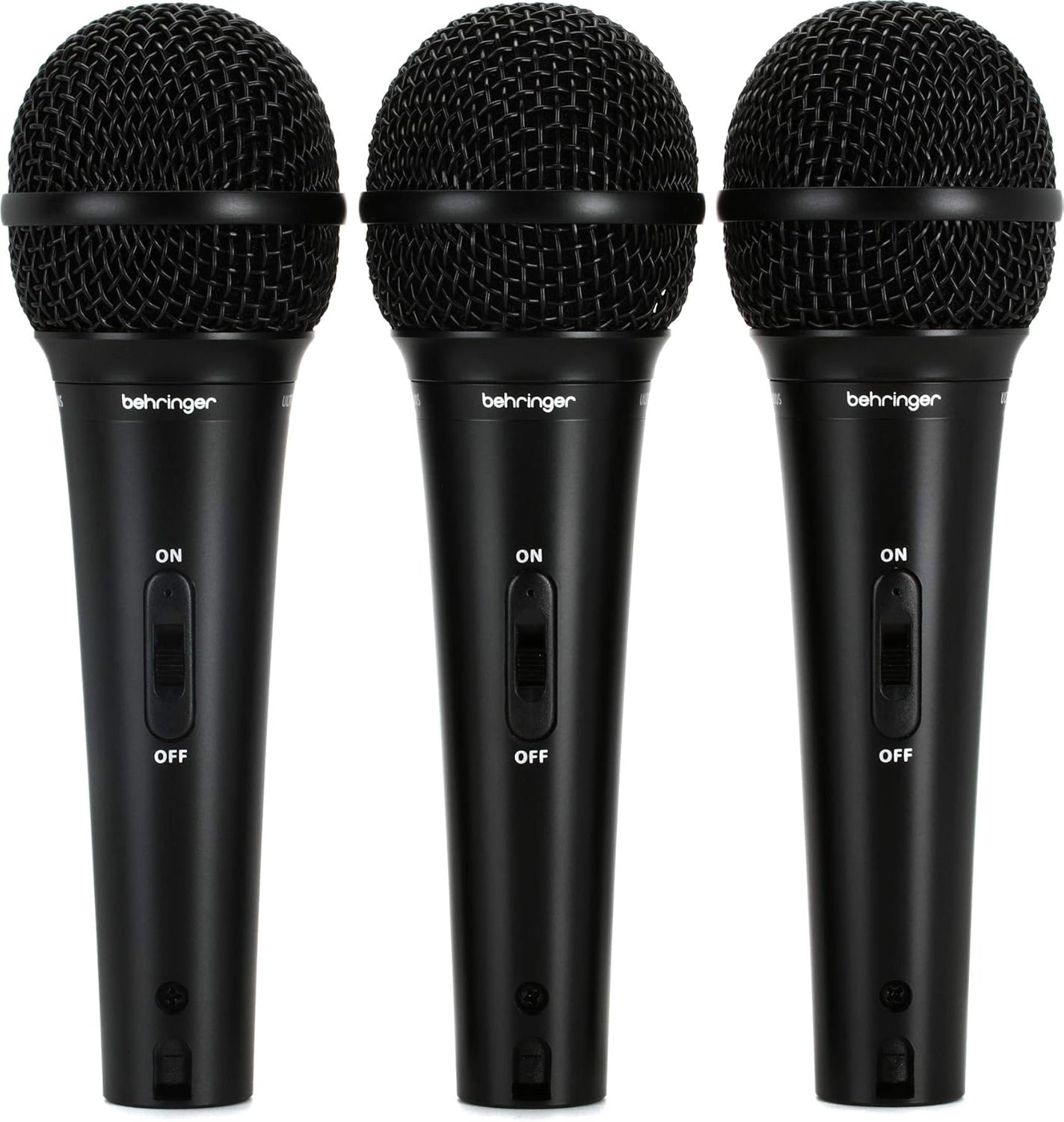 Best Value | 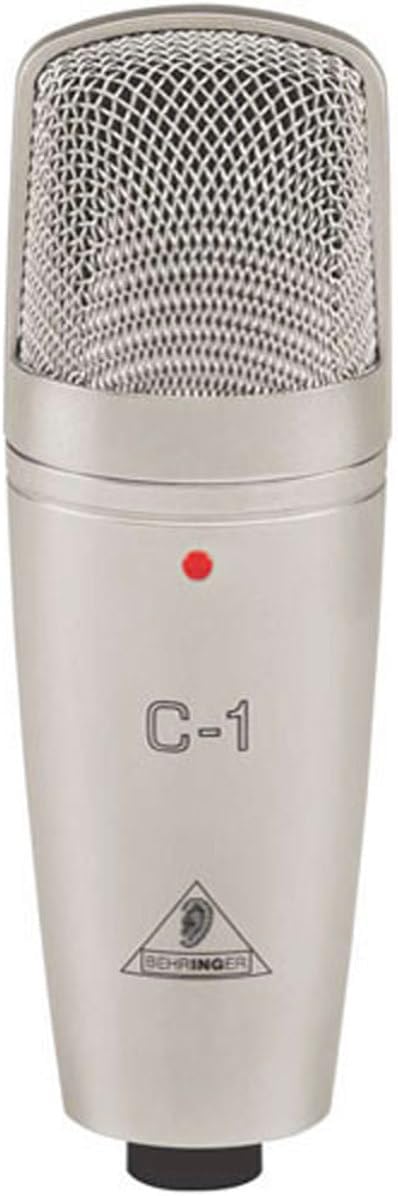 Best Condenser |
Behringer XM8500A reliable dynamic microphone that delivers clear vocals and strong noise control at an unbeatable price. | Behringer XM1800SA cost-effective multi-mic bundle designed for live performance and group recording setups. | Behringer C-1An affordable condenser microphone that adds detail and clarity for home studio recording. |
Sound Quality: ★★★★
Design: ★★★★
Features: ★★★★
| Sound Quality: ★★★★
Design: ★★★★
Features: ★★★★
| Sound Quality:★★★★
Design: ★★★★
Features: ★★★★
|
Let’s Go Over Each Behringer Microphone
#1: Behringer XM8500
The XM8500 is one of the most well-known budget microphones because it consistently delivers usable, reliable vocal performance at a very low cost.
It uses a dynamic cardioid design, which means it focuses on sound directly in front of the microphone while reducing background noise. This makes it particularly effective for live use, streaming, or recording in untreated spaces where condenser microphones would pick up too much ambient sound.
The sound profile leans slightly warm, with a controlled midrange that helps vocals remain clear without sounding thin. While it doesn’t capture the same level of detail as higher-end microphones, it performs well for speech and general vocal use.
In real-world scenarios, the XM8500 is valued for how predictable it is. It doesn’t require much setup, it handles noise well, and it works across different environments without major issues.
It’s not designed for precision studio work, but for most users, it delivers exactly what’s needed: clear, focused audio without complexity.
Pros and Cons of the Behringer XM8500
| Pros | Cons |
|---|---|
| ✔ Comes with built-in shock mount ✔ Fantastic price ✔ Great output of sound | ✘ Lacks Cord |
#2: Behringer XM1800S
The XM1800S stands out because it offers multiple microphones in one package, making it one of the most cost-effective options for live performance or multi-person setups.
Each microphone uses a dynamic cardioid design with a slightly brighter response compared to the XM8500. This helps vocals cut through a mix more easily, especially in live environments. The supercardioid-like behavior also helps reduce feedback and background noise.
In practice, this bundle is particularly useful for bands, events, or group recordings where multiple microphones are needed. Instead of investing in several individual mics, you get a complete setup that covers basic vocal and instrument needs.
While build quality is slightly lighter than that of higher-end models, the microphones are still durable enough for regular use. The included accessories, such as clips and a carrying case, add to the overall practicality.
This isn’t about premium sound. It’s about coverage, convenience, and value at scale.
Pros and Cons of the Behringer XM1800S
| Pros | Cons |
|---|---|
| ✔️ Excellent value with multiple microphones ✔️ Good vocal clarity for live use ✔️ Includes accessories and case | ✖️ Slightly lower build quality than single units ✖️ Less refined sound than higher-end mics ✖️ Not ideal for studio recording |
#3: Behringer C-1
The C-1 is Behringer’s entry into condenser microphones, offering greater detail and sensitivity compared to dynamic models.
Unlike the XM series, this microphone captures a wider frequency range, which makes it more suitable for vocals, acoustic instruments, and studio-style recording. The added sensitivity allows it to pick up subtle nuances that dynamic microphones often miss.
The sound is relatively neutral with a slight presence boost in the higher frequencies, helping vocals sound clearer and more forward. This can be useful for content creation and voice recording, where clarity is important.
However, that sensitivity comes with a trade-off. The C-1 will also pick up room noise and reflections more easily, which means it performs best in quieter environments.
For users stepping into studio recording, this microphone provides a noticeable upgrade in detail without a large investment.
Pros and Cons of the Behringer C-1
| Pros | Cons |
|---|---|
| ✔️ More detailed sound than dynamic mics ✔️ Good for vocals and instruments ✔️ Affordable condenser option | ✖️ Sensitive to background noise ✖️ Requires phantom power ✖️ Basic feature set |
#4: Behringer TM1
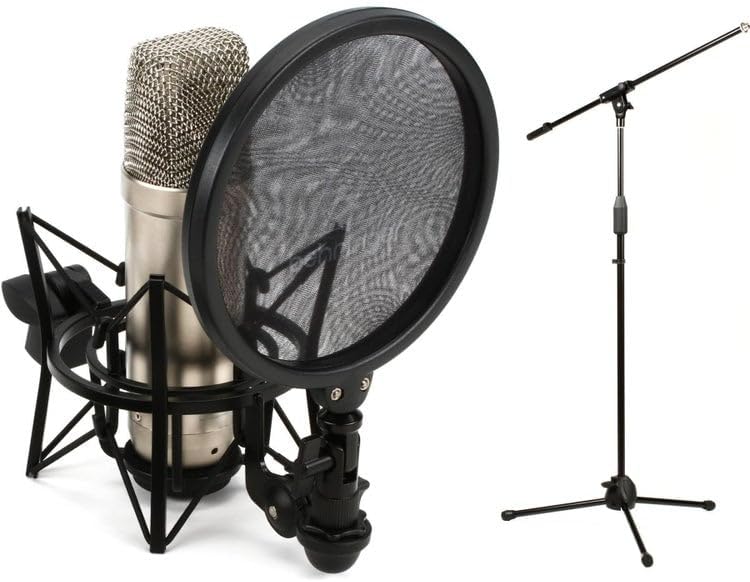
The TM1 is one of Behringer’s more advanced microphones, designed to deliver studio-level detail at a lower price point.
It uses a large-diaphragm condenser capsule with a very low self-noise level, which allows it to capture subtle details in vocals and instruments. This makes it suitable for more serious recording work where clarity and depth matter.
The sound profile is clean and slightly modern, with a controlled high end that avoids harshness. This makes it easier to work with during mixing compared to overly bright microphones.
In practice, the TM1 performs best in controlled environments where its sensitivity can be fully utilized. It reveals more detail than entry-level microphones, but also requires better setup and positioning.
This is a microphone aimed at users who want to move beyond basic recording and into more refined audio production.
Pros and Cons of the Behringer TM1
| Pros | Cons |
|---|---|
| ✔️ High level of detail and clarity ✔️ Low self-noise ✔️ Strong value for studio recording | ✖️ Sensitive to room acoustics ✖️ Requires proper setup ✖️ Less forgiving than dynamic mics |
#5: Behringer BC110
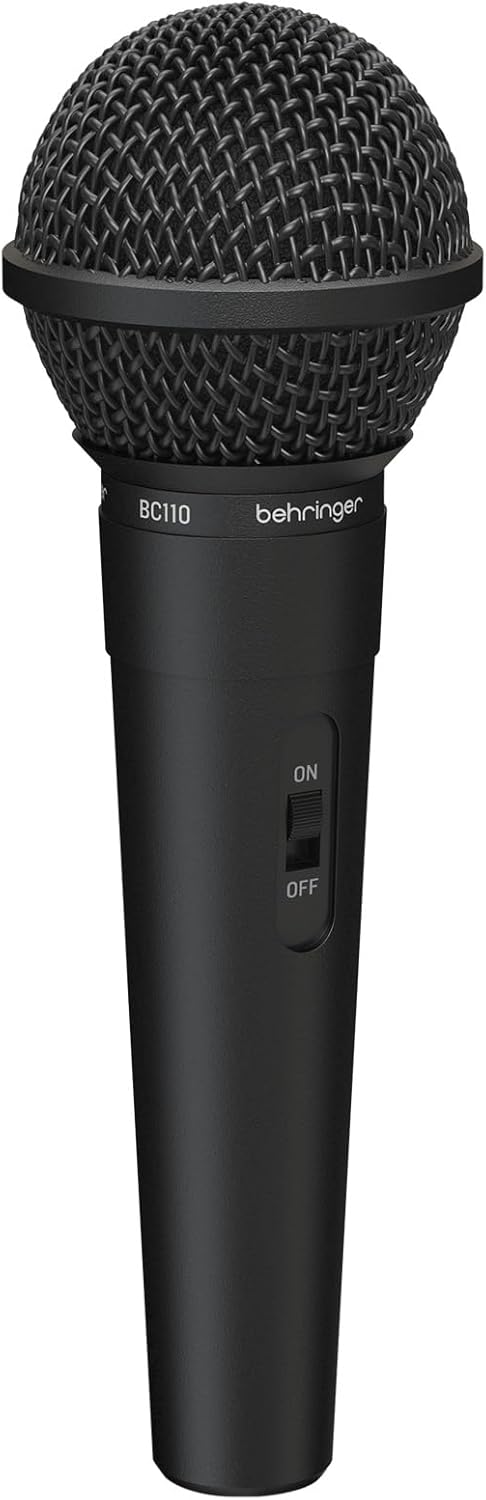
The BC110 is designed for users who want a simple, no-fuss microphone for basic recording or live use.
It uses a dynamic design that focuses on vocal clarity while reducing background noise. This makes it suitable for karaoke, presentations, or casual content creation where ease of use matters more than precision.
The sound is straightforward and functional. It doesn’t offer the depth or richness of higher-end microphones, but it provides clear and intelligible audio for everyday use.
One of its main strengths is accessibility. It’s easy to set up, requires minimal additional equipment, and performs consistently without needing adjustments.
This is a microphone built for simplicity rather than performance, ideal for beginners or backup use.
Pros and Cons of the Behringer BC110
| Pros | Cons |
|---|---|
| ✔️ Very affordable ✔️ Easy to use ✔️ Good for basic vocal applications | ✖️ Limited sound detail ✖️ Basic construction ✖️ Not suitable for studio work |
Why Behringer Microphones Are Popular for Budget Setups
Behringer microphones are widely used not because they compete with high-end studio gear, but because they solve practical problems at a low cost.
The biggest advantage is accessibility. Most Behringer microphones are designed so that users can get usable audio without investing in a full studio environment. Dynamic models like the XM series, for example, prioritize noise rejection and durability over extreme detail. This makes them far more forgiving in real-world situations like live performances, home recording, or streaming setups.
Another key factor is output level. Many Behringer dynamic microphones are designed with higher signal output, which helps vocals cut through mixes more easily, especially in live environments. This reduces the need for complex gain adjustments and makes them easier to use with basic audio interfaces.
There’s also a strong emphasis on simplicity. Most models avoid advanced controls or features, which means fewer things to configure and less room for user error. For beginners or casual users, this is often more valuable than having extra options.
At a broader level, Behringer microphones are built around function over refinement. They may not capture the same level of detail as premium microphones, but they consistently deliver clear, usable audio in situations where setup and environment are less controlled.
When to Choose a Behringer Microphone
Behringer microphones make the most sense when your priority is getting reliable audio without overcomplicating your setup.
They’re particularly strong in live environments. Dynamic models like the XM8500 or XM1800S are designed to handle stage use, where feedback control and durability matter more than fine detail. Their cardioid pickup patterns help reduce background noise and improve vocal focus.
They’re also a good fit for beginners. If you’re just starting out with recording or streaming, investing heavily in equipment doesn’t always make sense. A Behringer microphone allows you to build a functional setup first, then upgrade later once you understand your needs.
For multi-mic setups, they offer practical value. Bundles like the XM1800S allow you to cover multiple inputs, such as group vocals or interviews, without significantly increasing cost.
However, they’re less ideal for highly detailed studio work. Condenser microphones from Behringer can capture more nuance, but they still rely heavily on your recording environment. Without proper acoustic treatment, the benefits of that added sensitivity are limited.
In short, Behringer microphones are best when your priority is usability, durability, and cost-efficiency rather than maximum audio precision.
Final Note
Behringer microphones are built around accessibility and real-world usability. They don’t aim to compete with high-end studio gear. Instead, they focus on delivering microphones that work reliably in everyday situations. Whether you’re performing live, recording at home, or just starting out, they offer practical solutions that get the job done.
The key is understanding your needs. If you want simplicity and noise control, dynamic microphones like the XM8500 are the safest choice. If you need more detail for recording, stepping into a condenser like the C-1 or TM1 makes more sense. In the end, the best Behringer microphone isn’t about chasing the highest specs. It’s about choosing the one that fits your setup and delivers consistent results every time.
Editor’s Choice
Behringer XM8500
The Behringer XM8500 stands out because it focuses on practical performance rather than perfection.
It delivers clear, controlled vocals while minimizing background noise, making it usable in a wide range of environments. Unlike more sensitive microphones, it doesn’t demand a perfect setup to sound good.
What makes it the best overall choice is its balance. It’s affordable, durable, and consistent, three qualities that matter more than premium sound for most users.
For beginners, performers, and content creators, it provides a dependable foundation without unnecessary complexity.