
Your Ultimate Guide to the Best Microphones
Let’s get one thing straight. There’s no single “best microphone” for everyone. The right microphone depends on how you plan to use it. A podcaster needs something very different from a musician. A streamer has different priorities than a filmmaker.
That said, there are microphones that consistently stand out because of their sound quality, reliability, and versatility. These are the models professionals and creators keep coming back to. This guide breaks down the best microphones available today, covering different use cases, budgets, and setups, so you can find the one that actually fits your needs.
Which Microphone Is Best?
Editor's Choice  Best Overall | 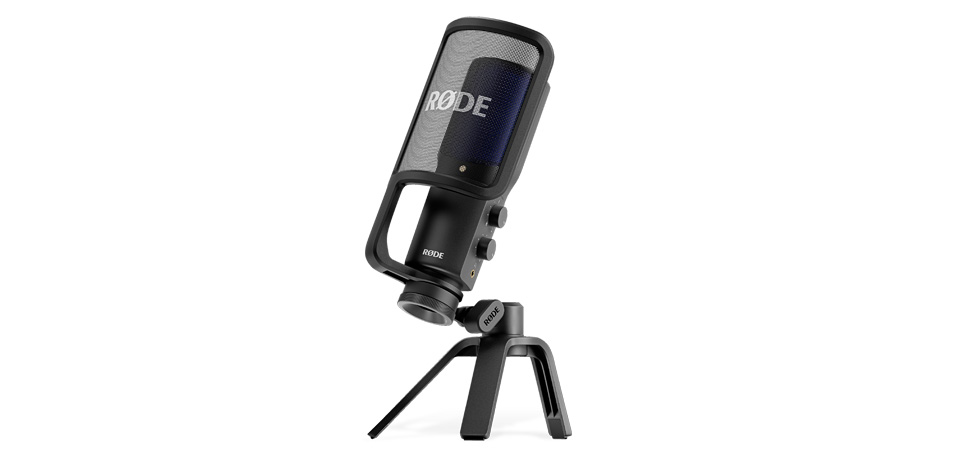 Best USB Microphone |  Best Broadcast Dynamic Microphone |
Neumann TLM 102A studio-grade condenser microphone that delivers exceptional clarity and versatility for vocals and instruments. | Rode NT-USB+A high-quality plug-and-play microphone that offers clean, balanced audio without the need for extra gear. | Electro-Voice RE20A broadcast-standard dynamic mic known for consistent tone and excellent noise control in professional voice applications. |
Sound Quality: ★★★★★
Design: ★★★★
Features: ★★★★
| Sound Quality: ★★★★
Design: ★★★★
Features: ★★★★
| Sound Quality:★★★★
Design: ★★★★
Features: ★★★★
|
Let’s Go Over Each Top Microphone
#1: Neumann TLM 102
The Neumann TLM 102 is one of the most accessible entry points into true studio-grade audio.
What separates this microphone from most condensers is its balance between precision and usability. It uses a large-diaphragm condenser capsule with a cardioid polar pattern, which focuses tightly on your voice while still capturing subtle tonal detail.
The frequency response has a slight presence boost in the upper mids, which helps vocals cut through a mix without sounding overly sharp. This makes it particularly effective for voiceovers, singing, and acoustic instruments.
Another key feature is its high SPL handling (up to 144 dB), meaning it can record loud sources like drums or guitar amps without distortion. This adds a level of versatility that many vocal-focused microphones lack.
Despite its studio-grade performance, the TLM 102 is more forgiving than ultra-sensitive condensers. It doesn’t exaggerate room imperfections as aggressively, making it usable in semi-treated environments.
However, it still benefits significantly from proper acoustic treatment and a quality audio interface. Without those, you won’t fully unlock its potential.
Pros and Cons of the Neumann TLM 102
| Pros | Cons |
|---|---|
| ✔️ Excellent vocal quality and clarity ✔️ Large diaphragm condenser mic ✔️ Can be used as a dual-mic amp setup ✔️ Wide-range frequency response | ✖️ Pricey |
#2: Rode NT-USB+
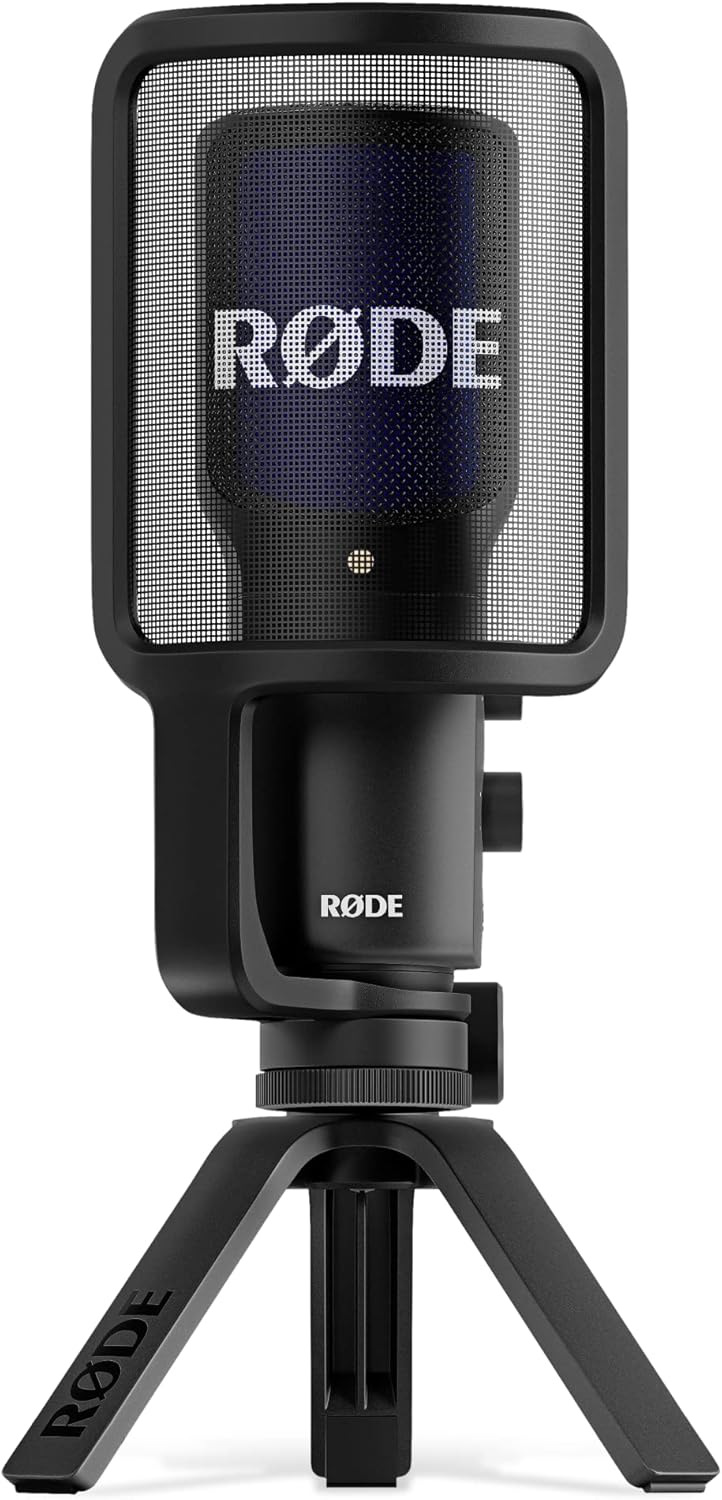
The Rode NT-USB+ is built for creators who want strong audio without the complexity of an XLR setup.
At its core is a condenser capsule tuned for vocal clarity. It delivers a clean, neutral sound with minimal coloration, which makes it suitable for voiceovers, streaming, and even light music recording.
One of its standout features is the integrated DSP processing via Rode’s software. You can apply compression, noise gating, and EQ directly without needing third-party tools. This is especially useful for beginners who don’t want to deal with complex audio chains.
It also includes zero-latency monitoring through a built-in headphone jack, allowing you to hear your voice in real time without delay.
The USB-C connection improves both power delivery and compatibility with modern devices, including laptops and tablets.
The trade-off is typical of condenser USB mics. It’s sensitive. If your environment is noisy or echo-prone, it will pick that up. This makes mic placement and room setup more important than many users expect.
Pros and Cons of the Rode NT-USB+
| Pros | Cons |
|---|---|
| ✔ Clean, natural sound ✔ Plug-and-play simplicity ✔ Built-in monitoring ✔ Strong build quality | ✖️ Limited upgrade path ✖️ Sensitive to background noise |
#3: Electro-Voice RE20
The Electro-Voice RE20 is a broadcast-standard microphone designed for consistent voice capture.
Its defining feature is Variable-D technology, which minimizes the proximity effect. Most microphones boost bass when you get close, but the RE20 maintains a stable tone regardless of distance. This is critical for broadcasters and podcasters who move naturally while speaking.
It also features a large diaphragm dynamic design, which captures more body and depth than typical dynamic microphones while still rejecting background noise effectively.
The internal pop filter reduces plosives without requiring external accessories, and the steel construction ensures long-term durability.
Because it’s a dynamic mic, it requires more gain than condensers. Pairing it with a strong preamp or audio interface is essential for optimal performance.
Pros and Cons of the Electro-Voice RE20
| Pros | Cons |
|---|---|
| ✔️ Multi-purpose mic with unique characteristics ✔️ Counter proximity effect ✔️ Gives focus to vocals | ✖️ Pricey ✖️ Not for acoustic guitar or cymbals |
#4: AKG C214

The AKG C214 is designed for capturing detailed audio in studio environments.
It uses a large-diaphragm condenser design derived from AKG’s higher-end models. The result is a microphone that delivers a strong transient response and high-frequency detail, which is especially important for vocals and acoustic instruments.
One of its key features is the built-in attenuation pad (-20 dB), which allows it to handle loud sources without distortion. This makes it suitable for recording drums, amplifiers, and other high-volume instruments.
It also includes a low-cut filter, which helps reduce rumble and unwanted low-frequency noise during recording.
The cardioid pattern ensures focused capture, but like most condensers, it requires a controlled environment to avoid unwanted reflections.
Pros and Cons of the AKG C214
| Pros | Cons |
|---|---|
| ✔️ Ideal for instruments ✔️ Easy to use ✔️ Incredible design | ✖️ Single pick-up pattern ✖️ Incorrect mic position and angle may allow plosives and background noise to pass through |
#5: Deity V-Mic D3 Pro
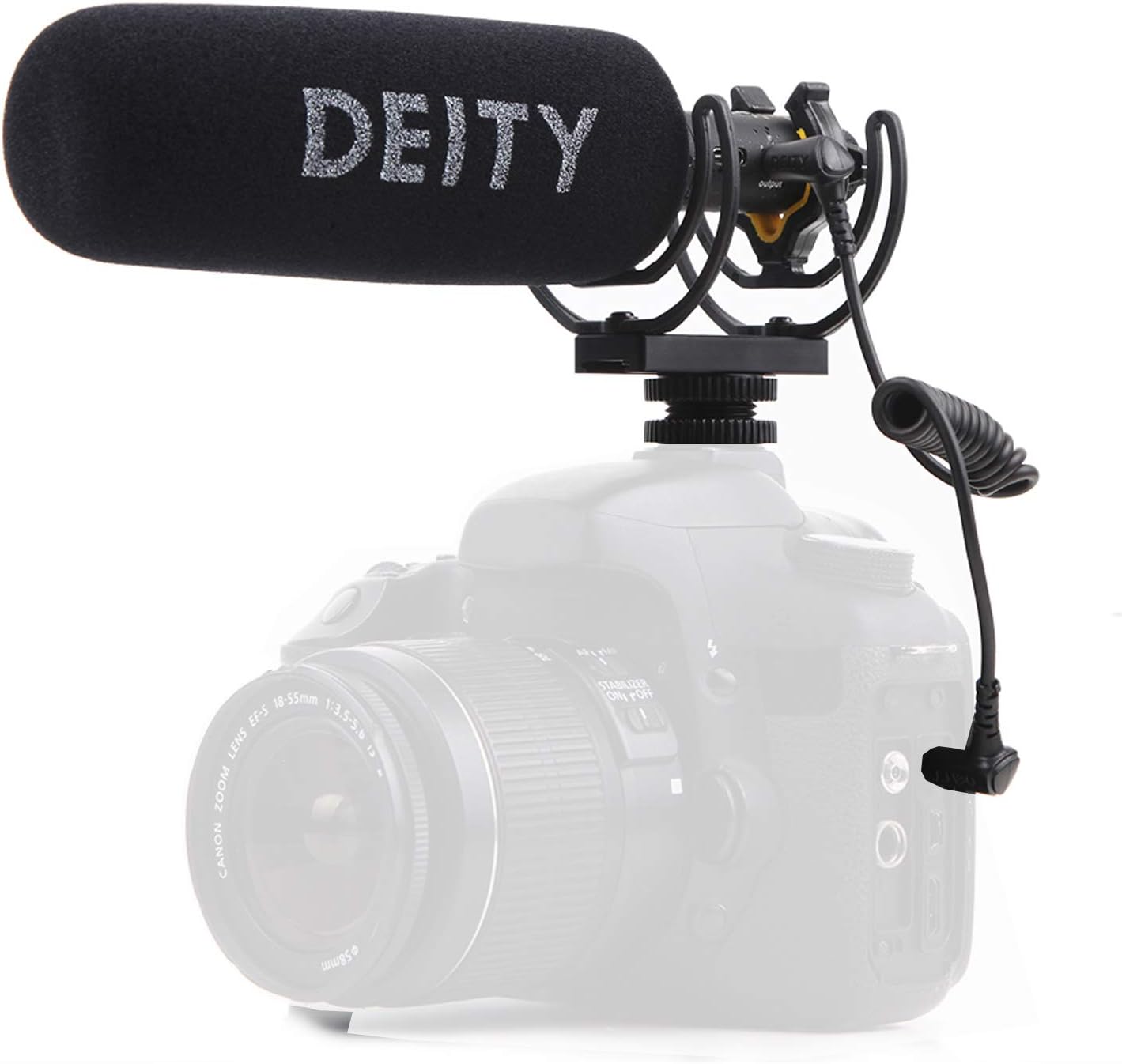
The Deity V-Mic D3 Pro is designed for directional audio capture, making it ideal for video production.
Its supercardioid pickup pattern focuses tightly on the subject while rejecting noise from the sides and rear. This is crucial when recording in uncontrolled environments.
A standout feature is its continuously variable gain knob, which allows precise control over input levels, something many shotgun mics lack.
It also includes a built-in rechargeable battery with long runtime, eliminating the need for constant battery replacements.
The compact design makes it easy to mount on cameras or boom poles, giving it flexibility across different shooting setups.
Pros and Cons of the Deity V-Mic D3 Pro
| Pros | Cons |
|---|---|
| ✔ Excellent directionality ✔ Great for video content ✔ Compact and portable ✔ Rechargeable battery | ✖️ Not ideal for desk recording ✖️ Requires positioning knowledge |
#6: Fifine K669B
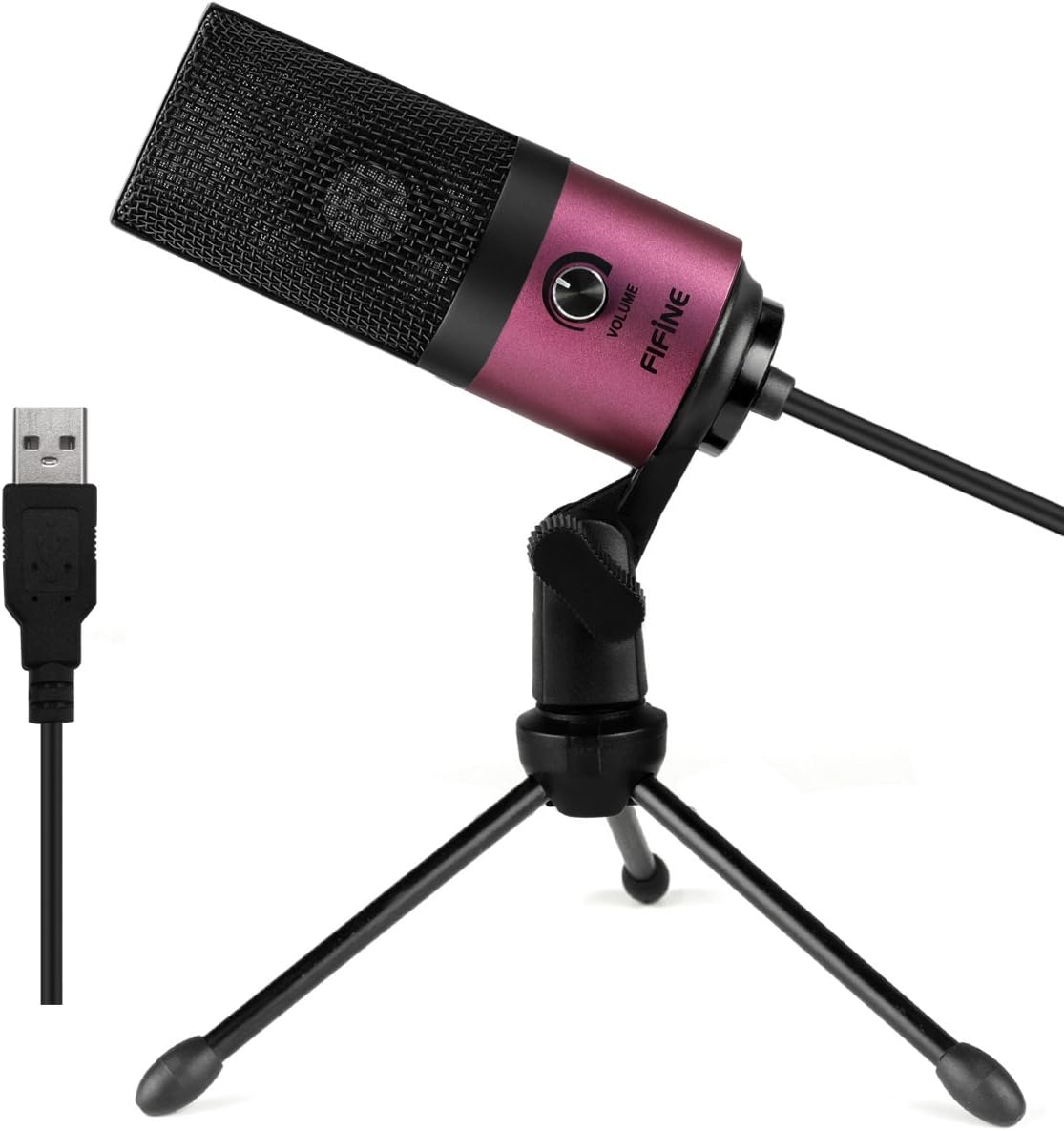
The FIFINE K669B is one of the most accessible entry-level microphones.
It uses a condenser capsule with a cardioid pattern, allowing it to focus on your voice while reducing some background noise.
The onboard gain knob gives you basic control over input levels, which is helpful for beginners adjusting their setup.
While it lacks advanced features like software integration or multiple pickup patterns, it delivers consistent, usable audio for casual recording, streaming, and meetings.
Its simplicity is both its strength and limitation. It works immediately but doesn’t offer much room for refinement.
Pros and Cons of the Fifine K669B
| Pros | Cons |
|---|---|
| ✔ Very affordable ✔ Easy plug-and-play ✔ Good entry-level sound ✔ Compact design | ✖️ Limited audio depth ✖️ Picks up background noise |
#7: Lewitt LCT 440 PURE
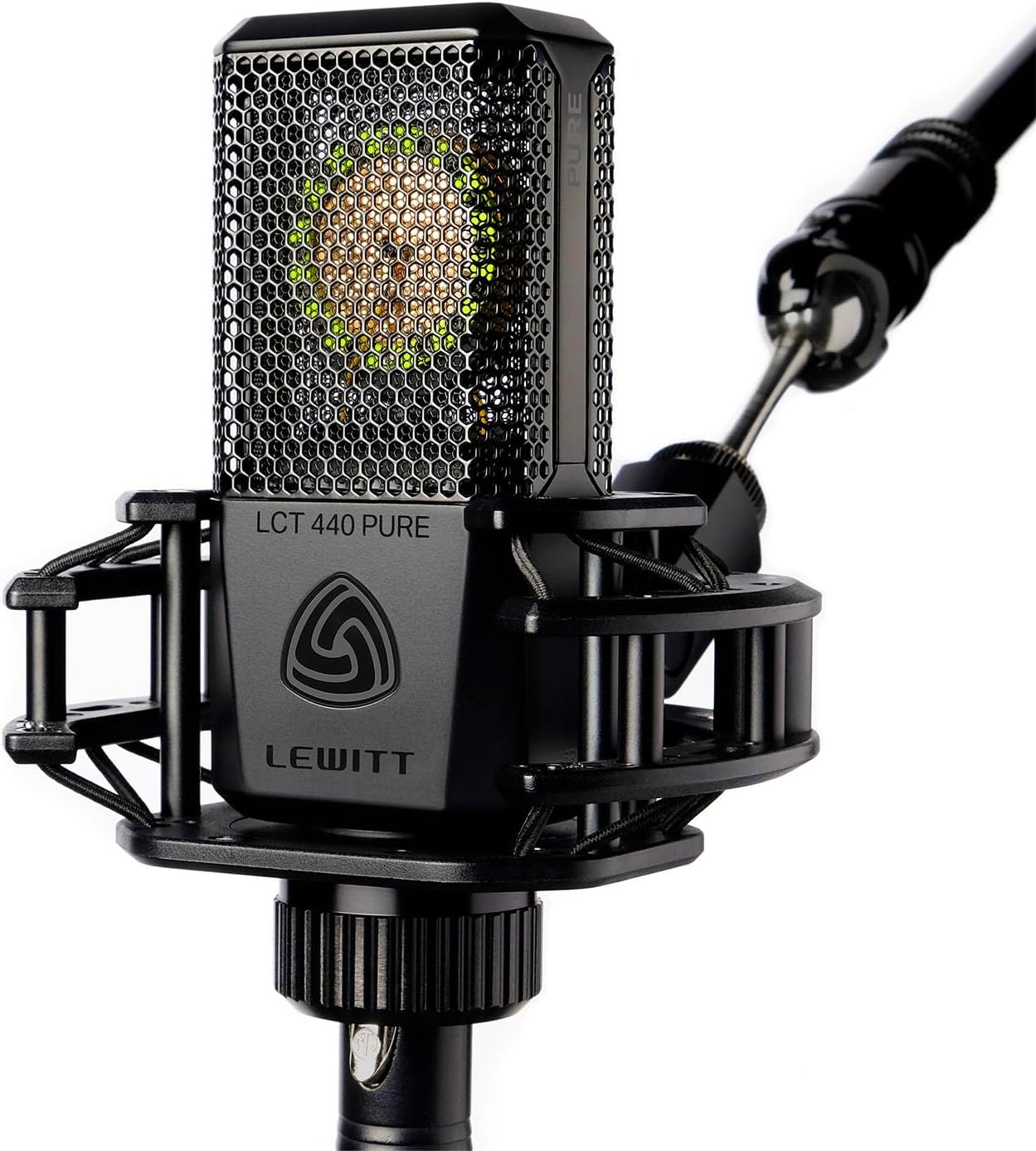
The Lewitt LCT 440 PURE is known for delivering high-end sound at a mid-range price.
It features a large-diaphragm condenser capsule with an exceptionally low self-noise level, which allows it to capture subtle details without introducing hiss.
The sound profile is clean and slightly modern, with a controlled top end that avoids harshness. This makes it suitable for vocals, instruments, and voiceover work.
Its internal shock mount system reduces handling noise, and the included accessories improve usability right out of the box.
Pros and Cons of the Lewitt LCT 440 PURE
| Pros | Cons |
|---|---|
| ✔ Extremely clean sound ✔ Low noise floor ✔ Strong value for money ✔ Great for vocals | ✖️ Needs treated space ✖️ Requires interface |
#8: Shure SM58

The Shure SM58 is one of the most reliable live microphones ever made.
It uses a dynamic cardioid design that focuses on vocals while rejecting background noise and feedback.
Its internal shock mount reduces handling noise, and the built-in grille acts as a pop filter, making it durable enough for constant live use.
This microphone is designed for consistency rather than perfection. It may not capture the same level of detail as studio mics, but it performs reliably in demanding environments.
Pros and Cons of the Shure SM58
| Pros | Cons |
|---|---|
| ✔ Industry-standard dynamic microphone ✔ Great live vocal mic ✔ Automatic setup out of the box ✔ Comes with several transmitter options | ✖️ Has no on/off switch |
How to Choose the Right Microphone
Match the Microphone to Your Environment
Your recording environment has a bigger impact than the microphone itself. If you’re working in an untreated room, reflections and background noise will affect your audio. In this case, dynamic microphones are more forgiving because they focus on sound directly in front of them.
Condenser microphones, while more detailed, will pick up everything, including echo, fan noise, and distant sounds. They perform best in treated or quiet environments.
Think About Your Setup
USB microphones simplify everything. You plug them in and start recording immediately. This is ideal for beginners or creators who want speed and convenience. XLR microphones require an audio interface, cables, and sometimes additional processing. However, they provide better control over gain, sound shaping, and multi-microphone setups. If you plan to scale your setup over time, XLR is the better long-term choice.
Consider Your Use Case
Different recording situations demand different microphone behavior. Streaming and casual content benefit from simplicity and clarity, making USB microphones a strong option. Music recording requires detail and dynamic range, which condenser microphones provide.
Video production often needs directional audio, making shotgun microphones more effective. Live performances prioritize durability and feedback rejection, which is why dynamic microphones dominate that space.
Frequently Asked Questions
What is the best microphone for beginners?
The FIFINE K669B is a solid entry-level choice.
What is the best professional microphone?
The Neumann TLM 102 is widely used in professional studios.
Are expensive microphones worth it?
Only if your setup can support them. Otherwise, you won’t hear the full benefit.
Final Note
The best microphone isn’t the most popular. It’s the one that fits your workflow. A $100 mic used correctly will outperform a $1,000 mic used poorly. Focus on your environment, your setup, and your goals. Once those align, the right microphone becomes obvious.

Editor’s Choice
Neumann TLM 102
The Neumann TLM 102 stands out as one of the most balanced microphones available today. It delivers professional-grade clarity without being overly demanding, making it one of the few studio microphones that works well across different setups.
What makes it particularly valuable is its versatility. It’s not limited to one use case. You can rely on it for voiceover work, music recording, and general studio use without needing multiple microphones.
If you’re looking for a long-term microphone that scales with your setup and consistently delivers high-quality results, the TLM 102 is one of the safest investments you can make.