
Fifine K669 vs Blue Yeti: Which USB Microphone Is Better?
Table of Contents
If you’re comparing the Fifine K669 vs Blue Yeti, you’re probably deciding between two very different approaches to USB microphones.
The Fifine K669 has earned a reputation as one of the best budget microphones available. It costs significantly less than most competitors while delivering surprisingly clean voice recordings. The Blue Yeti, meanwhile, has become one of the most recognizable USB microphones for creators thanks to its premium build, multiple pickup patterns, and versatile feature set.
The price gap between them is substantial, so the real question isn’t simply which microphone sounds better. It’s whether the Blue Yeti’s additional features justify the higher price for the type of content you create.
Who Each Mic Is For
Both microphones appeal to different audiences, and understanding that distinction makes the decision much easier.
Choose the Fifine K669 if…
The K669 is an excellent entry-level microphone for anyone upgrading from a headset or built-in laptop microphone. It’s particularly well suited to first-time content creators, students attending online classes, remote workers, gamers using Discord or in-game chat, beginner YouTubers, and anyone working with a limited budget.
Its simple plug-and-play design makes it an easy upgrade for users who want significantly better audio without spending a lot of money or learning complicated recording settings. The K669 keeps things simple. You plug it into your computer, adjust the gain, and start recording. There’s very little to learn, making it ideal if you just want better audio without worrying about technical settings.
Choose the Blue Yeti if…
The Blue Yeti is designed for creators who need more flexibility. It suits professional streamers, podcasters, voice-over artists, interview creators, musicians recording demos, and content creators who publish videos regularly.
Its multiple pickup patterns and onboard controls make it a versatile microphone that can adapt to a wide range of recording situations without requiring additional equipment.
Real Use Case Performance
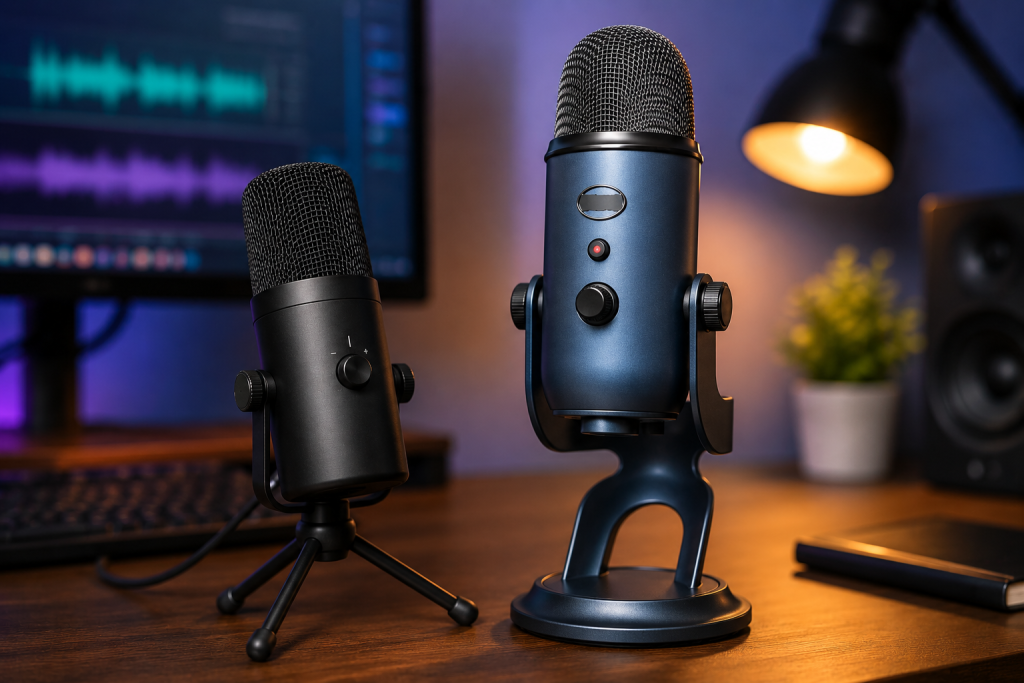
Specifications only tell part of the story. Here’s how each microphone performs during actual recording.
Streaming
The Fifine K669 performs surprisingly well for Twitch, YouTube Gaming, and Discord. Its cardioid pickup pattern focuses on your voice while reducing sounds coming from behind the microphone. Speech is clear, easy to understand, and requires very little setup. For someone streaming casually or just starting a channel, it’s more than capable.
The Blue Yeti adds several features that become increasingly valuable as your stream grows. Its zero-latency headphone monitoring lets you hear yourself in real time without delay, helping you maintain consistent microphone technique. The physical mute button is another advantage during livestreams, allowing you to silence yourself instantly without relying on software shortcuts.
Winner for streaming: Blue Yeti
Podcasting
Podcasting highlights one of the biggest differences between these microphones.
The Fifine K669 produces clean solo voice recordings, making it perfectly suitable for one-person podcasts. If you’re recording in a quiet room and adding some basic EQ during editing, listeners are unlikely to complain.
The Blue Yeti offers much greater flexibility. Its bidirectional mode allows two people sitting across from each other to record using a single microphone. Omnidirectional mode can capture multiple speakers during roundtable discussions. The fuller vocal reproduction also reduces the amount of editing required before publishing. If podcasting is your primary purpose, these features are worth paying for.
Winner for podcasting: Blue Yeti
Vocals
Neither microphone replaces a professional XLR condenser microphone for commercial music production, but both can record vocals. The Fifine K669 captures vocals with good clarity but tends to emphasize higher frequencies. This can make some voices sound slightly brighter than intended.
The Blue Yeti produces a fuller, warmer sound with greater detail across the frequency range. It handles subtle vocal dynamics better and captures more texture, making it a stronger option for singing, narration, and voice-over work. If you’re recording music demos or audiobook narration, the difference is noticeable.
Winner for vocals: Blue Yeti
Sound Profile Breakdown
Although both microphones are condenser microphones, they don’t sound the same.
Fifine K669
The K669 has a bright, forward sound that prioritizes speech intelligibility. Its tuning naturally pushes voices toward the front of the mix, making dialogue easy to understand during meetings, gaming, and streaming. This characteristic also explains why many beginners are impressed with its performance despite the low price.
However, it doesn’t capture as much low-end warmth or fine detail. Voices can occasionally sound thinner, particularly if you have a naturally higher-pitched voice. The microphone also leaves less room for post-processing because the captured audio isn’t as detailed as more expensive models.
Blue Yeti
The Blue Yeti delivers a richer and more balanced recording. Lower frequencies have greater presence, midrange vocals sound more natural, and high frequencies remain detailed without becoming overly sharp.
Another advantage is dynamic range. The Yeti captures subtle changes in vocal tone more accurately, which becomes particularly noticeable in podcasts, narration, and interviews where vocal expression matters. If you’re planning to edit your recordings, the Blue Yeti also provides cleaner source audio that responds better to EQ, compression, and noise reduction.
Sound Winner: Blue Yeti
Setup & Ease of Use
Both microphones are true plug-and-play USB devices. Simply connect them to Windows or macOS, choose the microphone in your recording software, and begin recording.
The Fifine K669 is arguably easier for complete beginners. There are almost no settings to worry about. The single gain knob controls recording sensitivity, and that’s essentially all you need to understand.
The Blue Yeti introduces several onboard controls that give users much greater control over their recordings. It features four selectable recording patterns, built-in headphone monitoring for listening to your audio in real time, dedicated gain adjustment, independent headphone volume control, and a physical mute button for instantly silencing the microphone.
While these features create a slightly steeper learning curve than the Fifine K669, they also make the Blue Yeti far more versatile for streaming, podcasting, and other content creation workflows. New users sometimes accidentally leave the microphone in stereo or omnidirectional mode, resulting in excessive room noise. For long-term usability, however, those controls become one of the Blue Yeti’s biggest strengths.
Ease of Use Winner: Fifine K669 for beginners, Blue Yeti for experienced creators.
Value for Money
This comparison becomes much closer when price enters the equation. The Fifine K669 consistently ranks among the best value USB microphones available because it delivers audio quality that exceeds expectations for its price. For many gamers, students, and remote workers, spending more simply won’t produce results that justify the additional cost.
The Blue Yeti costs considerably more, but you’re paying for more than improved sound quality. The Blue Yeti includes four recording patterns, more intuitive onboard controls, built-in headphone monitoring, and a sturdier all-metal construction.
These additions make it far more adaptable to different recording scenarios, from solo podcasts to interviews and livestreams. They also give the microphone greater long-term usability, allowing it to continue meeting your needs as your content creation skills and requirements evolve.
But if you only need a microphone for gaming, meetings, or occasional videos, the K669 delivers far greater value.
Value Winner: Fifine K669
Final Verdict
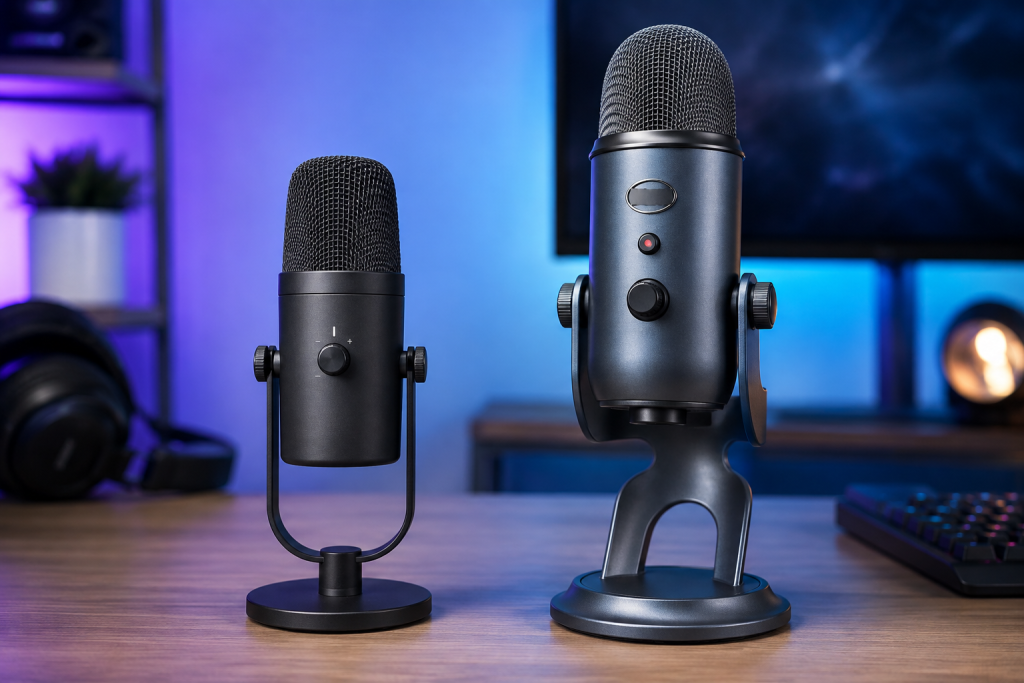
The better microphone depends entirely on what you expect from it.
Choose the Fifine K669 if:
- You have a limited budget.
- You want a simple plug-and-play microphone.
- You mainly use it for gaming, Discord, Zoom, or casual YouTube videos.
- You want the highest performance per dollar.
Choose the Blue Yeti if:
- You create podcasts regularly.
- You stream professionally.
- You record vocals or voice-over work.
- You need multiple recording patterns.
- You want headphone monitoring and onboard controls.
- You’d rather buy one microphone that can handle almost every recording scenario.
For pure affordability, the Fifine K669 is one of the strongest budget USB microphones on the market and remains difficult to beat. For creators looking for greater flexibility, richer sound, and features that support long-term content creation, the Blue Yeti is the clear winner. While it requires a larger upfront investment, it offers a more complete recording experience and is the better choice for anyone planning to grow beyond basic voice recording.


