Shure MV7 vs Rode PodMic: Which Microphone Is Better?
Table of Contents
The Shure MV7 and Rode PodMic are two popular choices for anyone who wants a broadcast-style dynamic microphone without jumping straight into higher-end studio equipment. Both can deliver strong spoken-word recordings, reject a useful amount of unwanted room sound, and work well with close microphone placement.
The similarities can make the choice harder than it first appears. The biggest difference isn’t simply which microphone sounds better. It’s how you intend to connect it, how much control you want over your sound, and whether you’re building a traditional XLR setup or want something that can work directly with a computer.
In the Shure MV7 vs Rode PodMic comparison, the MV7 is the more versatile microphone, particularly for streamers and solo creators. The PodMic makes more sense if you already have a capable audio interface and want a straightforward broadcast microphone without paying for USB connectivity and onboard digital features.
One detail matters before going further: this comparison covers the original XLR Rode PodMic rather than the newer PodMic USB. The PodMic USB adds digital connectivity and onboard processing, making it a closer feature-for-feature competitor to Shure’s USB/XLR microphones.
Who Each Mic Is For
The Shure MV7 is aimed at creators who want professional-style audio without committing to a traditional studio signal chain from day one. It has both USB and XLR outputs, which means you can connect it directly to a computer for a simple setup or plug it into an audio interface or mixer later.
That flexibility makes the MV7 particularly attractive if you’re assembling your first serious streaming or podcasting setup. You don’t have to buy an interface immediately, yet the microphone won’t become obsolete if you eventually move toward XLR equipment.
USB operation also unlocks the MV7’s digital features. Shure provides software control over settings such as gain, monitor mix, EQ, compression, limiter, and Auto Level Mode. The microphone also has a headphone output for direct monitoring. Its passive XLR output works independently of those software settings.
The Rode PodMic takes a more traditional approach. The original PodMic is an XLR dynamic broadcast microphone designed to connect to an audio interface, mixer, or similar equipment. There isn’t a USB shortcut around that signal chain. That makes the PodMic better suited to someone who already owns an interface or knows they want to build around XLR from the beginning. You’re paying primarily for the microphone itself rather than additional digital features.
Rode specifically positions dynamic microphones such as the PodMic for podcasting, broadcasting, streaming, and vocal applications, noting their ability to handle high sound levels while being less sensitive to room noise and reflections than typical condenser microphones.
The simplest way to separate them is this: choose the MV7 if versatility and easy setup matter most. Consider the PodMic if you already have the supporting equipment and primarily care about getting a solid XLR microphone.
Real Use Case Performance
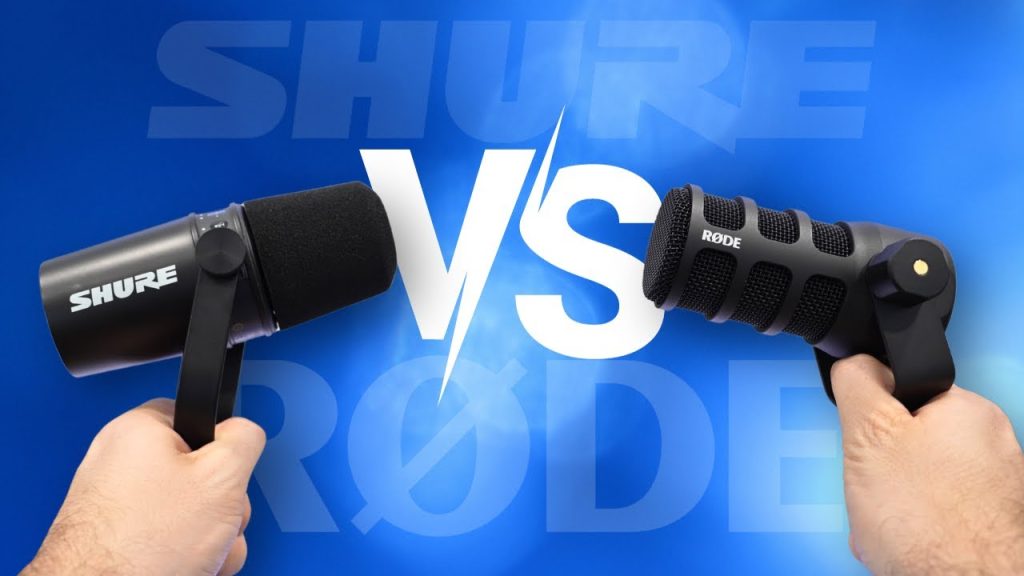
Specifications tell only part of the story. Microphone choice becomes much easier when you consider how the MV7 and PodMic behave in the applications they’re actually designed for.
Streaming
For streaming, the Shure MV7 has the stronger overall feature set. Its USB connection allows you to run the microphone directly into a computer without placing an audio interface on your desk. You also get direct headphone monitoring and convenient controls that are useful when you’re managing your own audio while streaming.
The MV7’s dynamic cardioid design is especially practical in typical bedrooms, offices, and gaming spaces. Shure’s Voice Isolation Technology is designed to focus pickup toward the speaker and reduce unwanted room sound. Unlike some of the MV7’s digital processing, Voice Isolation is an acoustic design feature, so it also applies when using the microphone through XLR.
That’s useful if your recording environment includes keyboard noise, computer fans, air conditioning, or room reflections. It won’t magically eliminate everything happening around you, but close placement and appropriate gain can produce a much cleaner result than you’d generally get from a sensitive condenser microphone sitting farther away.
The PodMic can also perform extremely well for streaming, especially when positioned close to your mouth. Its cardioid dynamic design helps limit unwanted sound, and its broadcast-style construction suits boom-arm placement. The difference is convenience. The original PodMic requires an interface, so a complete streaming setup involves more equipment. If you already own that equipment, this disadvantage largely disappears.
For someone building a streaming setup from scratch, however, the MV7 is easier to recommend.
Podcasting
Podcasting is where the comparison becomes much closer. Both microphones were built around spoken-word recording, and both encourage the close-mic technique associated with broadcast audio. Getting reasonably close increases the proportion of direct voice captured relative to room ambience, which can make recordings sound more controlled.
The MV7 is particularly strong for solo podcasts, remote interviews, and creators recording directly into a laptop. USB lets you create a compact recording setup without carrying an interface. Auto Level Mode can also be helpful for less experienced users. Rather than requiring constant manual gain adjustments, it can automatically maintain more consistent recording levels. Shure designed Near mode for close placement and Far mode for users sitting farther from the microphone.
The PodMic becomes more compelling when you’re building a conventional multi-microphone podcast studio. If every host already connects through an audio interface, mixer, or podcast console, the MV7’s USB capabilities become less valuable. In that situation, several PodMics can provide a consistent studio setup without making you pay for USB hardware and software features that you may never use.
For solo podcasting, the MV7 has the advantage. For an XLR-based multi-person studio, the PodMic can be the more economical choice.
Vocals
Neither microphone should be viewed primarily as a dedicated studio vocal microphone, but both can record singing. Their dynamic capsules make them useful when you’re working in a room that isn’t acoustically treated. A sensitive condenser microphone may capture more fine detail and high-frequency information, but it can also expose reflections, computer noise, traffic, and other problems in the recording environment.
The MV7 tends to make sense for musicians who also stream, podcast, or create video content. One microphone can move between spoken voice, demo vocals, livestream performances, and other content without requiring the same setup every time.
The PodMic is also capable of vocal recording, particularly if you prefer a close, focused sound. Rode identifies dynamic microphones including the PodMic as suitable for vocals as well as podcasting and streaming.
Technique matters considerably with either microphone. Distance changes the tonal balance of directional dynamic microphones because moving closer generally increases proximity effect, adding more low-frequency weight. If your vocal sounds too thick or muddy, moving slightly farther away can sometimes solve the problem before you reach for EQ.
For serious music production where capturing maximum vocal detail is the priority, neither would automatically be the first microphone to consider. For creators who need one microphone to handle speech and occasional singing, the MV7 is more adaptable.
Sound Profile Breakdown
The Shure MV7 and Rode PodMic both aim for a polished spoken-word sound, but they shouldn’t be expected to sound identical.
The MV7 has a voice-forward presentation influenced by its broadcast heritage. Shure designed the microphone with a frequency response intended to emphasize vocal clarity, while its Voice Isolation design reduces sensitivity to unwanted environmental sound.
Its sound is also unusually adjustable when you’re recording over USB. Instead of being permanently committed to the microphone’s untreated output, you can change processing and tonal settings through Shure’s software. That can be valuable because there isn’t one universally ideal podcast voice. Someone with a naturally deep voice may need different treatment from someone with a thinner or brighter voice. Your distance from the microphone also changes the result.
The PodMic provides a more conventional microphone-to-interface workflow. Your recorded tone depends on the microphone, placement, preamp, and whatever EQ, compression, or other processing you add later. Its broadcast-oriented tuning produces the full, present sound many users expect from a podcast microphone. Close positioning can provide substantial low-end body, but getting too close can make some voices overly heavy. Placement is therefore an important part of getting the PodMic to sound its best.
Neither microphone automatically produces a perfect “radio voice.” A large portion of the result comes from microphone technique, recording environment, gain staging, and processing. This distinction matters when comparing online microphone samples. Two reviews can make the same microphone sound surprisingly different simply because the speakers have different voices, microphone distances, interfaces, rooms, and processing chains.
The MV7 gives you more tools for shaping the sound before it reaches your recording software. The PodMic leaves more of that responsibility to your external equipment and post-production workflow.
Setup and Ease of Use
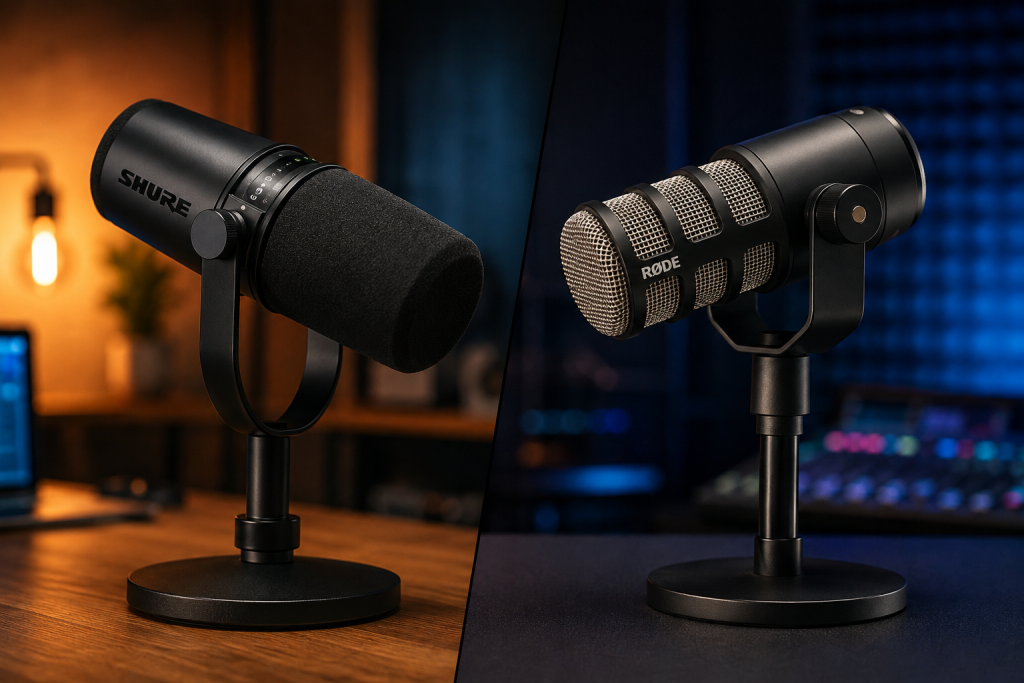
Setup is the area where the Shure MV7 establishes its clearest advantage over the original Rode PodMic. You can connect the MV7 directly to a compatible computer over USB and monitor through headphones plugged into the microphone. You can also adjust controls from the microphone and configure additional parameters through Shure’s software.
If you later buy an interface, you can switch to XLR instead. That progression makes the MV7 useful for beginners who don’t yet understand interfaces, preamps, gain staging, and complex audio routing. You can start with USB and learn the rest when you actually need it.
The original PodMic requires more preparation. Because it’s an XLR microphone, you’ll need an XLR cable and a compatible interface, mixer, or recorder with sufficient microphone preamp gain.
Dynamic broadcast microphones typically produce relatively low output levels, so the quality and available gain of the preamp matter. If your interface struggles to achieve a healthy level without excessive noise, additional gain equipment may sometimes be useful. You shouldn’t automatically assume you need an inline preamp, though. Test the microphone with your interface first.
This difference also changes the real cost of ownership. Comparing only the microphone prices can make the PodMic appear substantially cheaper, but someone starting from nothing also needs to account for the interface and XLR cable. For a creator who already owns an interface, those costs don’t matter. For a beginner, they do.
Both microphones are designed around close placement, so a good boom arm can also make a meaningful difference. Positioning the microphone close to your mouth allows you to use sensible gain while increasing the relative level of your voice compared with room noise.
Value for Money
The better value depends heavily on what equipment you already own.
The Rode PodMic’s strongest argument is straightforward: if you already have a capable audio interface, it gives you the core features you actually need from an XLR broadcast microphone without charging you for an integrated USB interface and software ecosystem. That’s particularly attractive when buying multiple microphones.
Suppose you’re assembling a podcast with three or four hosts. Once you already have a mixer or multi-input interface, paying extra for individual USB connectivity on every microphone provides relatively little benefit. The PodMic’s simpler design starts making financial sense at scale.
The Shure MV7 justifies its higher positioning through flexibility. You’re effectively getting a dynamic microphone plus digital connectivity, direct monitoring, onboard controls, software configuration, and an XLR upgrade path in one device. That can reduce the number of components a beginner needs to purchase.
There’s also value in not having to replace equipment later. Someone can begin podcasting over USB and eventually switch the same MV7 into an XLR studio setup.
However, buyers should also consider where the original MV7 sits in Shure’s current lineup. Shure now markets the newer MV7+, which uses USB-C alongside XLR and adds features such as a real-time Denoiser, Digital Popper Stopper, enhanced Auto Level Mode, onboard DSP, and a customizable LED touch panel. That means the price you actually find for the original MV7 matters. If it’s heavily discounted, it can represent excellent value. If its price is close to the newer MV7+, comparing the two Shure models before buying makes sense.
There’s a similar consideration on the Rode side. The PodMic USB expands the original concept with USB-C and XLR connectivity, headphone monitoring, onboard DSP, an integrated pop filter, and a wider set of digital features. If you like the PodMic but need USB, don’t assume you have to switch brands. The PodMic USB is the Rode model you should be comparing with USB-capable alternatives.
Shure MV7 vs Rode PodMic: Which One Should You Buy?
The Shure MV7 vs Rode PodMic decision comes down to your recording workflow more than a simple difference in sound quality.
For most first-time streamers and solo podcasters, the Shure MV7 is the better all-around choice. USB connectivity makes getting started easier, direct headphone monitoring simplifies recording, software controls give you more ways to refine your sound, and XLR connectivity provides room to upgrade your setup later.
The Rode PodMic is the stronger value for an established XLR setup. If you already own an interface or podcast mixer and don’t need USB connectivity, paying more for the MV7’s digital features may accomplish very little. This becomes especially relevant when you’re purchasing several microphones for a multi-person podcast.
For streaming, the MV7 wins because its connectivity and onboard controls make managing a solo setup easier. For solo podcasting, the MV7 wins again for flexibility. For a multi-mic XLR podcast studio, the PodMic offers better value. For occasional vocals, either can work, although the MV7’s broader feature set makes it more versatile for creators who move between different types of content.
Sound alone shouldn’t determine the purchase. Both microphones are capable of producing professional-quality spoken audio when they’re positioned and configured correctly. The real difference is what surrounds the microphone. If you want one mic that can start on your desk over USB and later become part of a full XLR studio, the Shure MV7 is the winner. If your interface is already sitting on your desk and you simply need a durable, focused broadcast microphone, the Rode PodMic is the more economical choice.