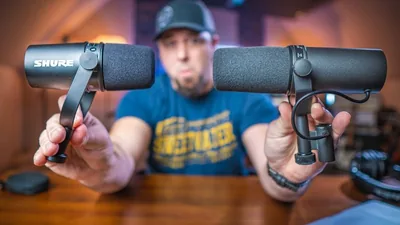
Shure SM7B vs MV7: Which Microphone Should You Actually Buy?
Choosing between the Shure SM7B and the Shure MV7 isn’t just about sound quality. It’s about how you work, where you record, and how much effort you’re willing to put into your setup.
On paper, these microphones look similar. Both come from Shure. Both are dynamic. Both are used for podcasting, streaming, and vocals. But in practice, they serve very different users. If you’re trying to decide between them, you need to understand what actually changes in real-world use.
Who Each Mic Is For
Who Should Choose the SM7B
The SM7B is built for people who care about control and consistency above everything else. It’s not a plug-and-play microphone. It expects you to build a proper signal chain around it. You’re the right user if you already have an audio interface, or you’re willing to invest in one. The SM7B requires a lot of clean gain, which means you’ll likely need a preamp or booster like a Cloudlifter. Without that, the microphone can sound quiet or lifeless.
Where it shines is in controlled environments. If you’re recording in a treated room or you’re willing to learn EQ and compression, the SM7B gives you a level of polish that’s hard to replicate with simpler setups. It responds well to processing, which is why it’s used in professional studios and broadcast environments. This isn’t the mic you buy for convenience. It’s the one you choose when you want full control over your sound.
Who Should Choose the MV7
The MV7 is designed for speed and accessibility. It removes the complexity that comes with traditional XLR setups and replaces it with a hybrid system that works over USB or XLR. If you’re a content creator who wants good audio without spending hours tweaking settings, this is where the MV7 fits. You can plug it directly into your computer, use Shure’s software to adjust tone and gain, and get a clean result immediately.
That doesn’t mean it’s limited. The MV7 still supports XLR if you decide to upgrade later. It grows with your setup, which makes it one of the most flexible microphones in its category. It’s especially strong for creators working in untreated rooms. The built-in DSP helps shape the sound in ways that would otherwise require external gear.
Real Use Case Performance
SM7B vs MV7 for Streaming
Streaming environments are unpredictable. Background noise, keyboard clicks, and inconsistent mic positioning all affect the final output.
The SM7B performs extremely well in noise rejection. Its tight pickup pattern and natural roll-off help isolate your voice, even in less-than-perfect conditions. But it only works at its best when paired with proper gain staging. Without enough clean gain, your voice won’t cut through the mix.
The MV7 handles streaming differently. It uses built-in processing to stabilize your sound. Auto-level mode keeps your volume consistent even if you move slightly. That’s a major advantage for streamers who aren’t sitting perfectly still. In practical terms, the MV7 often delivers more consistent results for solo streamers.
The SM7B can sound better, but only if the setup is dialed in properly.
SM7B vs MV7 for Podcasting
Podcasting demands clarity and consistency over long sessions. This is where both microphones perform well, but for different reasons.
The SM7B produces a smooth, broadcast-style tone that feels natural over extended listening. It reduces harshness and keeps voices easy to listen to, even without heavy processing. However, achieving that sound requires proper gain and positioning.
The MV7 simplifies the process. Its USB mode allows you to record directly into your software without additional hardware. The onboard processing ensures that your voice remains clear and balanced, even if your environment isn’t ideal.
For solo podcasters or small teams, the MV7 often wins on practicality. For studio-level productions, the SM7B still holds an edge.
SM7B vs MV7 for Vocals and Music
When it comes to vocals, the difference becomes more noticeable.
The SM7B handles dynamic vocal performances better. It absorbs loud peaks without distortion and maintains a consistent tone across different singing styles. This makes it a strong choice for rock, hip-hop, and spoken word.
The MV7 can handle vocals, but it’s not as forgiving with dynamic range. Its processing helps, but it doesn’t replace the natural headroom of the SM7B.
If you’re serious about music recording, the SM7B offers more flexibility in post-production. The MV7 works best for casual or content-focused vocal recording.
SM7B vs MV7 Sound Profile Breakdown
Low-End and Proximity Effect
The SM7B has a stronger proximity effect. When you get close to the mic, it adds depth and warmth to your voice. This is part of what gives it that classic “radio” sound.
The MV7 controls this effect more aggressively. It keeps the low end tighter, which can be helpful for maintaining clarity but slightly reduces that deep, full tone.
Midrange Clarity and Presence
Both microphones perform well in the midrange, but the SM7B sounds more natural. It doesn’t emphasize frequencies artificially, which makes it easier to shape in post.
The MV7 boosts presence slightly to help voices cut through mixes. This makes it sound clearer out of the box, especially in USB mode.
High-End Detail and Sibilance Control
The SM7B is known for its smooth high-end response. It reduces harshness and sibilance without needing much adjustment.
The MV7 introduces more high-end detail. This can make recordings sound more modern, but it also means sibilance can become more noticeable if not controlled.
Noise Rejection and Room Handling
Both microphones reject background noise well, but the SM7B performs better in untreated environments when positioned correctly.
The MV7 compensates with DSP. It actively shapes the signal to reduce noise, which helps users who don’t have acoustic treatment.
Setup and Ease of Use
Gain Requirements and Interfaces
The SM7B is demanding. It needs a high-quality interface that can deliver clean gain. Many setups also require a gain booster. This adds cost and complexity, but it also gives you full control over your audio chain.
The MV7 eliminates that requirement in USB mode. It handles gain internally, which simplifies the entire process.
USB vs XLR Workflow
The SM7B is strictly XLR. That means you’re locked into a traditional audio setup.
The MV7 offers both USB and XLR. You can start simple and transition into a more advanced setup later without replacing your microphone.
Software and DSP Control
The MV7 includes built-in DSP through Shure’s software. You can adjust EQ, compression, and gain without external tools.
The SM7B relies entirely on external processing. This gives you more flexibility but requires more knowledge.
Value for Money
True Cost of SM7B Setup
The SM7B itself isn’t the full cost. You need to factor in:
- Audio interface
- Possible gain booster
- Cables and accessories
By the time everything is set up, the total investment is significantly higher.
MV7 as an All-in-One Solution
The MV7 includes everything you need to start recording. There’s no additional hardware required for basic use. For most creators, this makes it a more cost-effective option, especially in the early stages.
Final Verdict: Which One Should You Choose?
If you want maximum control, long-term flexibility, and the ability to shape your sound professionally, the SM7B is the better choice. It rewards effort and proper setup with a polished, broadcast-quality result.
If you want simplicity, speed, and consistent results without dealing with extra gear, the MV7 is the smarter option. It removes friction and lets you focus on creating content.
There isn’t a universal winner. The right choice depends on how you work and what you value in your setup.
Frequently Asked Questions
Do you need a Cloudlifter for the SM7B?
In most cases, yes. The SM7B requires a lot of clean gain, and many audio interfaces struggle to provide enough without introducing noise. A Cloudlifter or similar gain booster helps bring the signal to a usable level without degrading quality.
Can the MV7 replace the SM7B?
For many creators, it can. If you’re producing podcasts, streaming, or recording voiceovers, the MV7 delivers more than enough quality. However, in professional studio environments where precise control and post-processing matter, the SM7B still performs better.
Which mic is better for untreated rooms?
The MV7 is generally more forgiving because of its built-in processing. It helps stabilize your sound even when your environment isn’t ideal. The SM7B can perform well, too, but it relies more on positioning and setup.
Is USB audio good enough for professional content?
Yes, depending on the context. USB microphones like the MV7 can produce high-quality audio suitable for podcasts, streaming, and video content. For music production or broadcast-level work, XLR setups still offer more control.
Why is the SM7B so popular?
The SM7B has been used in professional studios for decades. Its ability to handle different voices, reduce harshness, and respond well to processing makes it a reliable choice for high-end production.