
The History and Evolution of Binaural Recording
Table of Contents
Binaural recording might sound like a modern audio innovation, but its roots go back more than a century. What makes binaural audio so fascinating is its ability to replicate how humans naturally hear sound. When recorded properly, binaural recordings create the illusion that sound is coming from all directions around the listener: above, behind, beside, and in front.
Today, binaural recording is widely used in immersive audio experiences, ASMR, VR environments, and advanced music production. But the journey to modern binaural sound technology is long and filled with experimentation, breakthroughs, and technological leaps.
Understanding the history of binaural recording reveals how engineers and researchers gradually learned to capture sound the same way our ears perceive it.
What Is Binaural Recording?
Binaural recording is an audio technique that captures sound using two microphones positioned to mimic the human ears. When played back through headphones, the recording reproduces spatial cues such as direction, distance, and depth.
Unlike traditional stereo recordings, binaural audio accounts for how sound waves interact with the head, ears, and body. This interaction is often described through a concept called the Head-Related Transfer Function (HRTF), which explains how sound changes before it reaches the ear canal.
Key characteristics of binaural recordings include:
- Realistic spatial audio perception
- Three-dimensional sound placement
- Highly immersive listening experiences
- Accurate directional cues when using headphones
Because of these qualities, binaural recording has become important in modern media such as virtual reality, gaming, and immersive storytelling.
Early Experiments With Binaural Audio (Late 1800s)
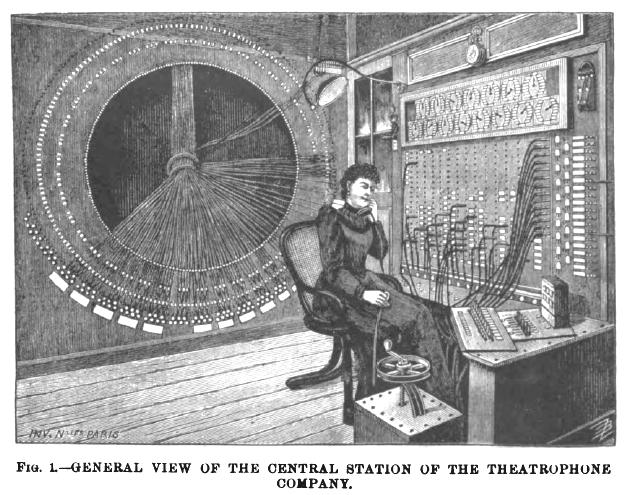
The earliest known binaural recording experiment dates back to 1881 during the International Exposition of Electricity in Paris. French engineer Clément Ader introduced a system called the Théâtrophone.
The Théâtrophone allowed listeners to hear live opera performances from the Paris Opera using two telephone receivers placed at each ear. Microphones were positioned along the stage to capture sound from different angles.
Although primitive compared to today’s technology, the system demonstrated a revolutionary idea: sound could be transmitted in a way that simulated spatial hearing. This early experiment showed that placing separate audio signals in each ear could reproduce the illusion of location and distance.
The Rise of Dummy Head Microphones (1930s–1950s)
The next major breakthrough came with the invention of the dummy head microphone.
Researchers realized that simply using two microphones was not enough to reproduce natural hearing. Human ears are shaped in ways that alter sound waves, creating subtle timing and frequency differences between the left and right ears. To replicate this effect, engineers began designing artificial heads with built-in microphones positioned inside ear-shaped structures.
One of the most influential developments occurred at Bell Laboratories in the 1930s. Researchers created experimental dummy head recording systems to better understand human hearing and improve telephone audio. Later, in the 1950s, German researchers refined the concept further, producing some of the earliest commercially viable binaural recordings.
Dummy head microphones helped capture realistic audio cues such as:
- Interaural time differences (ITD)
- Interaural level differences (ILD)
- Sound reflections caused by the shape of the ears
These cues are essential for realistic spatial audio.
Binaural Recording in Music and Broadcasting (1960s–1970s)
During the 1960s and 1970s, binaural recording began appearing in experimental music productions. One of the most famous early releases was “Exploring Binaural Sound” by Emory Cook, who experimented with dual-channel recordings to produce realistic sound environments.
At the same time, several audio engineers started using dummy head microphones to record orchestras and acoustic performances. However, binaural audio faced a major limitation during this period: it worked best when played through headphones.
Because most people listened to music through loudspeakers, binaural recordings did not gain widespread commercial adoption. Still, the experiments of this era helped audio engineers understand how spatial sound reproduction could transform the listening experience.
The Digital Audio Revolution (1980s–1990s)
The arrival of digital audio technology in the 1980s dramatically expanded the possibilities for binaural recording. Digital processing allowed engineers to simulate spatial audio using mathematical models rather than relying solely on physical dummy heads.
Advances during this period included:
- Digital signal processing (DSP) for spatial audio
- Head-related transfer function modeling
- Improved microphone sensitivity
- Multi-channel audio recording systems
Researchers also began exploring virtual binaural audio, where computer algorithms replicate how sound behaves around the human head. This made it possible to generate three-dimensional sound environments even without specialized microphones. These developments laid the foundation for modern spatial audio technology.
Binaural Recording in the Age of VR and Immersive Media
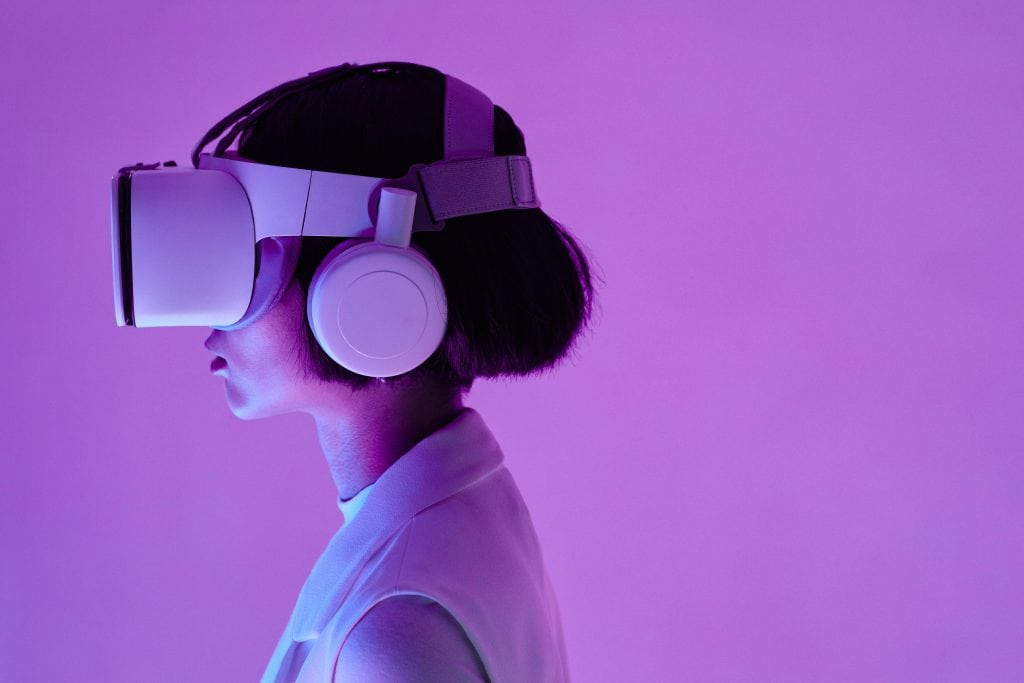
Today, binaural recording has entered a new golden age. Advances in virtual reality, augmented reality, and immersive gaming have created a massive demand for realistic spatial audio. When combined with head tracking, binaural sound can adapt to a listener’s movements, making virtual environments feel incredibly real.
Modern binaural recording tools include:
- High-end dummy head microphones
- Compact binaural in-ear microphones
- AI-driven spatial audio rendering systems
- Software-based binaural audio engines
Content creators now use binaural recording in many fields, including:
- ASMR recordings
- immersive podcasts
- film sound design
- virtual reality storytelling
- interactive gaming audio
The rise of headphone listening through smartphones has also helped popularize binaural audio among everyday listeners.
The Role of Binaural Audio in Modern Content Creation
Today’s content creators increasingly rely on binaural techniques to build immersive experiences. For example, ASMR creators use binaural microphones to produce relaxing soundscapes where listeners feel as if someone is whispering directly beside them.
In gaming and VR environments, binaural audio helps players detect the direction of footsteps, voices, or environmental sounds. Film sound designers also use binaural recording to simulate first-person perspectives in scenes where spatial awareness enhances storytelling.
Because of these applications, binaural audio is no longer considered a niche technology. It has become a key part of modern audio production.
The Future of Binaural Recording
The future of binaural recording is closely tied to immersive technologies. Several trends are likely to shape its continued evolution:
- Personalized head-related transfer functions for more accurate sound reproduction
- AI-generated spatial audio environments
- Integration with augmented reality glasses and mixed-reality systems
- More compact and affordable binaural microphones
As spatial computing grows, realistic audio will become just as important as visual immersion. Binaural recording provides the most natural way to reproduce how humans hear the world, making it a critical technology for the next generation of digital experiences.
Conclusion
Binaural recording has evolved from experimental telephone systems in the 19th century to a cornerstone of modern immersive audio. From the early Théâtrophone demonstrations to sophisticated VR sound environments, the technology has steadily improved our ability to reproduce how humans naturally hear sound.
As immersive media continues to grow, binaural recording will likely play an even bigger role in shaping the future of audio experiences.
FAQs About Binaural Recording
What makes binaural recording different from stereo recording?
Stereo recording uses two channels to create left and right sound separation, but it does not replicate how sound interacts with the human head and ears. Binaural recording captures those acoustic cues, allowing listeners to perceive sound direction and distance more accurately when using headphones.
Why do binaural recordings work best with headphones?
Headphones isolate each audio channel so the left and right signals reach the correct ear without interference. When played through speakers, the signals mix together, which reduces the spatial effect.
Are binaural recordings used in virtual reality?
Yes. Virtual reality applications rely heavily on binaural audio to create immersive environments. By combining binaural sound with head tracking, VR systems can adjust audio positioning based on the listener’s movements.
Can you create binaural recordings without a dummy head?
Yes. Some creators use in-ear microphones placed in their own ears, while others simulate binaural audio using software and spatial audio processing tools.
Is binaural audio the future of immersive sound?
Many experts believe so. As VR, AR, and spatial computing continue to expand, binaural recording is becoming one of the most effective ways to recreate realistic three-dimensional sound experiences.


