
Shure MV7 vs HyperX QuadCast: Which USB Microphone Is Better for Streaming, Gaming, and Podcasting?
Table of Contents
The Shure MV7 and HyperX QuadCast are two of the most recognizable USB microphones on the market, yet they were built with different priorities in mind. Both can produce excellent recordings, but they approach the job from opposite directions.
The Shure MV7 focuses on professional voice reproduction, background noise rejection, and long-term flexibility. Inspired by Shure’s legendary broadcast microphones, it’s designed for creators who prioritize audio quality and may eventually upgrade to professional recording equipment.
The HyperX QuadCast takes a more accessible approach. It combines solid sound quality with beginner-friendly features like multiple pickup patterns, a built-in shock mount, RGB lighting, and an intuitive tap-to-mute sensor. It’s especially popular among gamers and streamers who want a microphone that’s easy to use right out of the box.
Rather than asking which microphone is objectively better, the more useful question is which one better matches the way you create content.
| Feature | Shure MV7 | HyperX QuadCast |
|---|---|---|
| Microphone Type | Dynamic | Condenser |
| Connectivity | USB + XLR | USB |
| Polar Patterns | Cardioid | Cardioid, Stereo, Omnidirectional, Bidirectional |
| Headphone Monitoring | Yes | Yes |
| RGB Lighting | No | Yes |
| Best For | Podcasting, voice-over, streaming | Gaming, streaming, Discord, casual podcasting |
| Background Noise Rejection | Excellent | Good |
| Upgrade Potential | Excellent | Limited |
Who Each Microphone Is For
Shure MV7
The Shure MV7 is built for creators whose voice is the centerpiece of their content. If you produce podcasts, YouTube videos, educational content, interviews, or voice-over work, you’ll appreciate how naturally it reproduces speech while minimizing unwanted background sounds.
One of its biggest strengths is its dynamic capsule. Unlike condenser microphones, which capture nearly everything in the room, a dynamic microphone focuses primarily on what’s directly in front of it. That makes the MV7 especially forgiving if you’re recording in a bedroom, home office, or gaming room without acoustic treatment.
The MV7 also appeals to creators who think long term. Because it includes both USB and XLR outputs, it can grow alongside your setup. You can start recording through USB today and connect it to an audio interface later without replacing the microphone. If your goal is consistently professional-sounding spoken audio, the MV7 is designed with that purpose in mind.
HyperX QuadCast
The HyperX QuadCast targets a broader audience. It’s an excellent choice for gamers, Twitch streamers, Discord users, and creators who want great sound without learning the technical side of audio production.
Its plug-and-play design makes setup incredibly simple. Connect the USB cable, select the microphone in your software, and you’re ready to go. Features like the integrated shock mount, tap-to-mute sensor, and built-in gain control make everyday use effortless, even for first-time creators.
The QuadCast’s four selectable polar patterns also make it more versatile for situations involving multiple speakers. Whether you’re recording a tabletop game, interviewing a guest across the desk, or capturing a group discussion, switching pickup patterns is much easier than repositioning microphones.
If convenience, versatility, and aesthetics matter as much as sound quality, the QuadCast remains one of the strongest options in its price range.
Real-World Performance
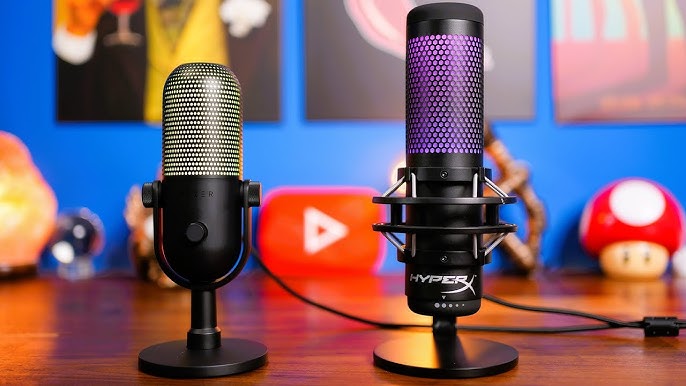
Specifications only tell part of the story. The real difference between these microphones becomes obvious once you begin using them in everyday recording situations.
Streaming
Streaming environments are rarely quiet. Mechanical keyboards, mouse clicks, controller buttons, PC fans, notifications, and room noise all compete with your voice. This is where the Shure MV7 has a noticeable advantage.
Its dynamic capsule naturally rejects off-axis sounds, meaning it captures far less of your surroundings than a condenser microphone. Even before adding software noise suppression through OBS Studio or NVIDIA Broadcast, recordings typically sound cleaner and more focused. The result is a stream where your audience primarily hears your voice rather than your keyboard or air conditioner.
The HyperX QuadCast performs well for streaming, but its condenser design captures considerably more detail, including sounds you may not want in your recording. While the included shock mount helps eliminate desk vibrations, it can’t prevent the microphone from picking up room ambience or distant noises. If your recording space is already quiet and acoustically treated, this sensitivity becomes an advantage because voices sound more open and detailed. In a typical bedroom or office, however, it often means spending more time adjusting filters and noise suppression.
Streaming Winner: Shure MV7. Its superior background noise rejection makes it a more reliable choice for most home streaming setups.
Podcasting
Podcast listeners often spend thirty minutes or more with a single voice. That makes consistency just as important as clarity.
The Shure MV7 produces the kind of warm, controlled sound commonly associated with professional radio and podcast studios. Voices remain smooth over long listening sessions without becoming harsh or fatiguing. Because the microphone minimizes room reflections, recordings also require less cleanup during editing. Another advantage is its USB and XLR connectivity. Many podcasters eventually upgrade to dedicated audio interfaces, and the MV7 makes that transition seamless.
The HyperX QuadCast can absolutely produce enjoyable podcasts, particularly in quiet rooms. Its brighter sound can make conversations feel lively and energetic. However, because it captures more of the surrounding environment, room acoustics have a greater influence on the final recording.
Podcasting Winner: Shure MV7. For hobby podcasts or casual conversations, the QuadCast performs well. For creators pursuing a polished, broadcast-style production, the MV7 offers a noticeable advantage.
Vocal Recording and Voice-Over
Not everyone buying these microphones plans to stream games or record podcasts. Many creators use them for YouTube narration, online courses, audiobook samples, voice acting auditions, and spoken presentations.
The Shure MV7 excels in these situations because it produces a rich midrange that flatters spoken voices. High frequencies remain controlled, reducing the sharpness that sometimes appears in cheaper microphones.
The HyperX QuadCast emphasizes vocal detail differently. Its condenser capsule captures more high-frequency information, producing recordings that sound crisp and airy. For naturally deep voices, this extra brightness can create an engaging presentation.
The trade-off is that condenser microphones also reveal more imperfections. Mouth noise, breathing, room echo, and sibilance become more noticeable unless your recording space is well controlled. For spoken-word recording, consistency generally outweighs extra detail.
Vocals Winner: Shure MV7
Sound Profile Breakdown
Although both microphones produce high-quality recordings, they create distinctly different listening experiences.
Shure MV7: Warm, Focused, and Broadcast Ready
The MV7 has a sound signature that many listeners associate with professional radio stations and podcast studios. Its midrange is full and natural, allowing voices to sound authoritative without becoming muddy. High frequencies remain smooth rather than exaggerated, while bass response adds warmth without overwhelming speech.
Because it captures less room ambience, recordings feel intimate, as though the speaker is sitting close to the listener. This forgiving nature also makes the MV7 particularly effective in untreated recording spaces.
HyperX QuadCast: Bright, Detailed, and Spacious
The QuadCast takes the opposite approach. Its condenser capsule captures more detail across the frequency spectrum, especially in the upper frequencies. Voices often sound brighter and more energetic, with greater perceived openness.
That additional detail can make recordings feel more vibrant, but it also means the microphone faithfully reproduces everything else happening in the room. In an acoustically treated studio, this sensitivity can produce impressive results. In an average bedroom or office, reflections and background sounds become much more noticeable.
Dynamic vs. Condenser: Why the Difference Matters
The distinction between these microphones isn’t simply about brand. It’s about microphone technology.
Dynamic microphones, like the MV7, naturally reject environmental noise and perform exceptionally well in less-than-perfect recording environments. Condenser microphones, like the QuadCast, prioritize sensitivity and detail. They excel in controlled spaces where unwanted sounds have already been minimized.
Neither approach is universally better. Your recording environment often determines which microphone produces the cleaner final result.
Setup and Ease of Use
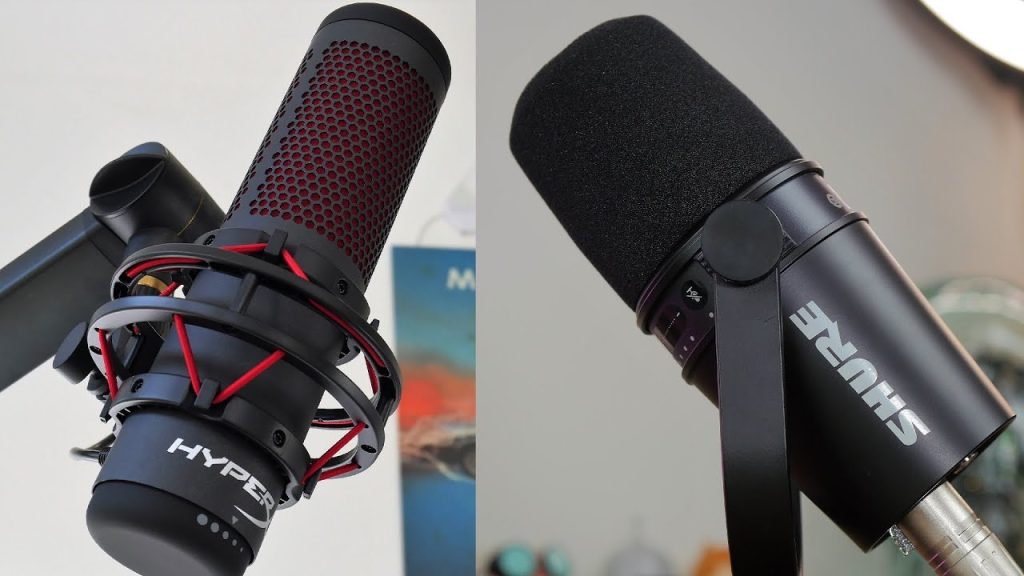
Both microphones are remarkably beginner-friendly, but they simplify the recording process in different ways.
The HyperX QuadCast is arguably the easiest microphone to start using. Installation requires little more than connecting the USB cable and selecting it as your input device. The built-in gain control is easy to access, while the tap-to-mute sensor provides instant visual feedback through its LED lighting. Its integrated shock mount also eliminates the need for an immediate accessory purchase.
The Shure MV7 requires only slightly more effort but offers greater flexibility in return. Through Shure’s MOTIV Mix software, users can enable Auto Level Mode, which intelligently adjusts microphone gain based on speaking distance and vocal volume. Beginners can achieve excellent recordings without understanding compression or equalization, while experienced users can switch to manual controls for finer adjustments.
The MV7’s dual USB and XLR connectivity is another advantage that becomes increasingly valuable over time. It allows creators to improve the rest of their audio setup without replacing the microphone itself.
For users who simply want to plug in a microphone and start gaming, the QuadCast is the easier choice. For creators willing to spend a few extra minutes optimizing their setup, the MV7 provides greater long-term flexibility.
Value for Money
The better value depends entirely on what you expect from your microphone over the next several years.
The HyperX QuadCast packs an impressive number of features into a single purchase. Its integrated shock mount, multiple pickup patterns, RGB lighting, tap-to-mute functionality, and straightforward setup make it one of the best values for gamers and casual streamers. If your recording needs are unlikely to expand beyond USB, it offers excellent performance without requiring additional equipment.
The Shure MV7 typically costs more, but much of that premium goes toward features that continue paying off over time. Better vocal isolation, professional-grade tuning, advanced software controls, and XLR compatibility extend its useful lifespan well beyond that of many USB microphones. For creators who anticipate upgrading to mixers or audio interfaces, the MV7 may actually prove to be the more economical purchase because it eliminates the need to buy a second microphone later.
If you’re buying a microphone primarily for gaming and streaming, the QuadCast delivers outstanding value. If you’re investing in content creation as a long-term hobby or profession, the MV7 offers a stronger return on investment.
Which Microphone Should You Buy?
The Shure MV7 and HyperX QuadCast both deserve their popularity, but they excel in different situations.
Choose the Shure MV7 if your priority is podcasting, YouTube narration, voice-over work, livestreaming in a noisy room, or producing professional-quality spoken audio. Its dynamic design delivers cleaner recordings with less background noise, and its USB/XLR connectivity ensures it can grow alongside your recording setup.
Choose the HyperX QuadCast if your focus is gaming, Twitch streaming, Discord communication, or creating content with minimal setup. Its multiple pickup patterns, built-in shock mount, and gamer-friendly features make it one of the most approachable USB microphones available.
For most creators whose content revolves around their voice, the Shure MV7 is the stronger overall microphone. It consistently produces cleaner recordings, handles imperfect recording environments better, and offers a clear upgrade path through its XLR connection. The HyperX QuadCast remains an excellent choice for gamers and casual creators, but when long-term audio quality is the deciding factor, the MV7 earns the edge.


